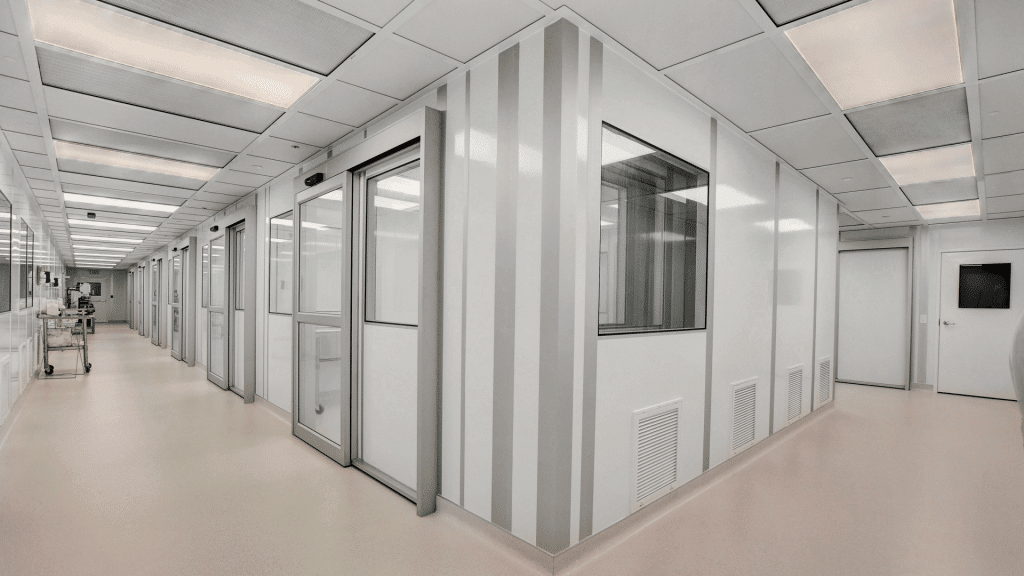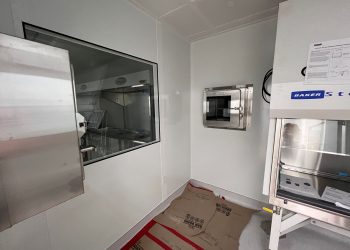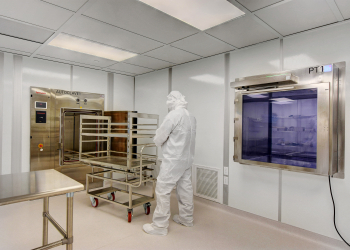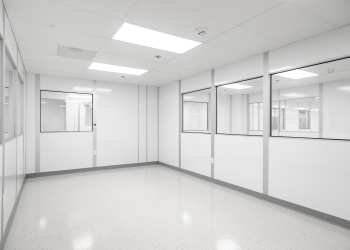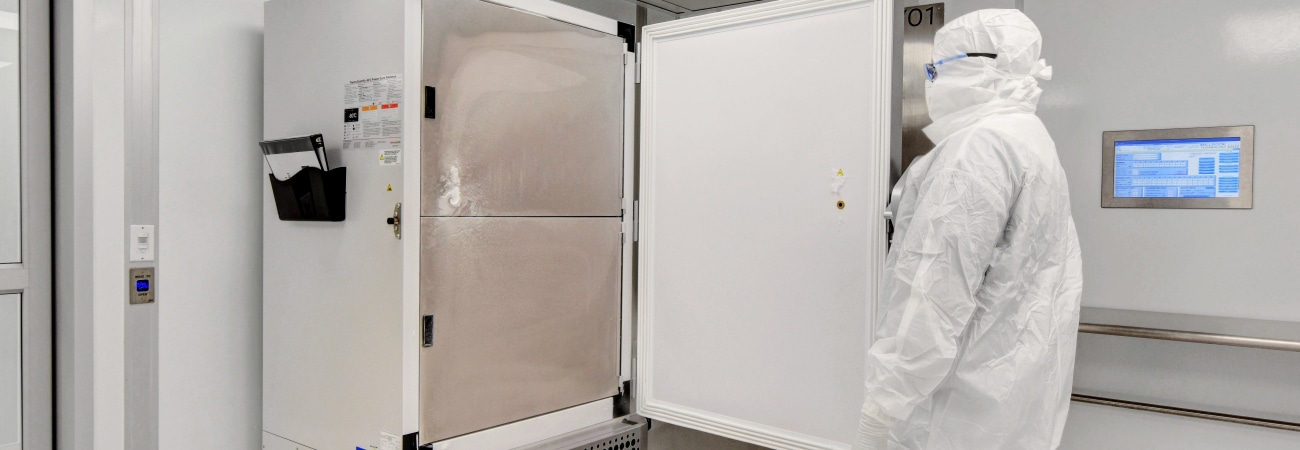
If you’ve been looking into cleanrooms for pharmaceutical manufacturing, or even medical devices, you may have come across the term “aseptic cleanroom.” Though not strictly a formal classification, the term has become a common way to refer to cleanrooms designed for aseptic processing. In this article, we’ll cover what exactly that means, who needs them, and how these spaces differ from “standard” cleanrooms (if there is such a thing).
What Are “Aseptic” Cleanrooms?
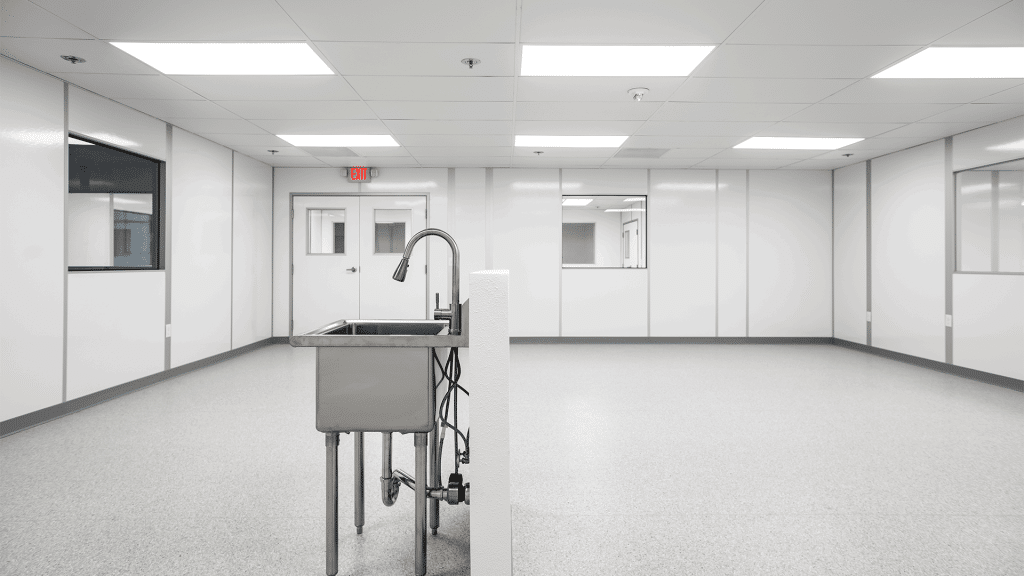
In simple terms, they are cleanrooms that, beyond controlling the number of particles in general, also reduce or eliminate viable contaminants, i.e., microorganisms, like bacteria or mold.
But why would a cleanroom need to do this? It comes down to the product being made. Aseptic processing is needed when certain products are required to stay sterile throughout a production process, and can’t be sterilized after the fact.
The next question that many have is: what’s the difference between “aseptic” and “sterile”?
You can think of sterile as the end result; a sterile product has no viable microorganisms in it.
Aseptic, on the other hand, describes the process. It’s the set of conditions and practices that keep contamination from getting in.
And these are the exact conditions that “aseptic cleanrooms” are designed to create.
Who Needs Aseptic Cleanrooms?

These cleanrooms are most common in industries where sterility is a regulatory requirement. Some of the most common uses include:
- Pharmaceutical manufacturing
- Cell and gene therapy
- Biologics and vaccines
- Compounding pharmacies
- Medical device manufacturing
If your product can’t be sterilized after manufacturing, chances are you need an aseptic environment.
What Makes Them Different from Other Cleanrooms?
We know, as we said at the beginning, that a standard cleanroom controls the number of airborne particles, typically to a specific ISO classification. Aseptic cleanrooms of course do that too, but require a few additional layers of control, specifically aimed at microbial contamination. Here are some of the most important differences:
Classifications. The critical processing area in an aseptic cleanroom is typically ISO Class 5, which corresponds to GMP Grade A. The surrounding areas (buffer rooms/gowning rooms) are usually ISO 7 or ISO 8, corresponding to Grade B or C. This is stricter than what many non-aseptic cleanrooms need.
Airflow. Aseptic cleanrooms often have unidirectional airflow, or laminar flow, over important zones. All this means is that the air moves in smooth, parallel layers from ceiling to floor, and this in turn helps sweep particles and microorganisms away from the product. A standard cleanroom may use turbulent airflow, which is far less controlled.
Monitoring. Both viable and non-viable particles need to be monitored. In a standard cleanroom, you might only be tracking non-viable particles with a laser particle counter. In an aseptic environment, you also need viable monitoring, which includes active air sampling, settle plates, contact plates, and personnel monitoring.
Gowning. Sterile garments, double gloving, and aseptic gowning procedures are also standard. The requirements go well beyond what is typical for an ISO 7 or ISO 8 cleanroom.
The Bottom Line
So what is an aseptic cleanroom? Put simply, it’s a cleanroom where aseptic processing can take place. These environments require more than standard particle control, and if that’s the kind of work your facility does, it’s worth understanding how these cleanrooms differ so you can plan accordingly.