It should go without saying that not all particles in a cleanroom are the same, even though ISO standards may appear to treat them as such. Some are inert, like dust, while others are alive and capable of multiplying.
Before building a cleanroom, it’s important to understand the differences between viable and non-viable particles, as it can affect everything from how your cleanroom is designed to what kind of monitoring it will need.
In this article, we’ll cover what each type is, how each is monitored, and what it all means for your cleanroom.
What Are Non-Viable Particles?
Non-viable particles are simply non-living ones. In other words, dust, fibers from clothing, flakes of skin, or other non-living matter. If they get stuck into crevices in your cleanroom, they won’t reproduce or spread, but they can still be a form of contamination.
In pharmaceutical and biotech cleanrooms, non-viable particles are still a concern because they can carry viable microorganisms on their surfaces, essentially acting as transport vehicles for them.
In semiconductor and electronics cleanrooms, they’re a problem for entirely different reasons, as one particle landing in the wrong place can cause a product defect.
Non-viable particles are what ISO 14644-1 classifications are based on. And they’re measured using particle counters, which can provide continuous, real-time data on particle concentration in the air.
What Are Viable Particles?
Viable particles, on the other hand, are living microorganisms, such as bacteria, fungi, mold, yeast, and spores. What makes them specifically dangerous, as compared to non-viable particles, is the fact that they can multiply.
In pharmaceutical, biotech, and medical device cleanrooms, viable contamination is a primary concern because it directly threatens patient safety. One contamination event can result in a failed batch, lawsuits, or worse.
What’s more, viable particles cannot be detected by standard laser particle counters alone. Because identifying living organisms requires an additional step, culturing and incubating samples, viable monitoring takes longer and involves different methods entirely.
How Each Is Monitored
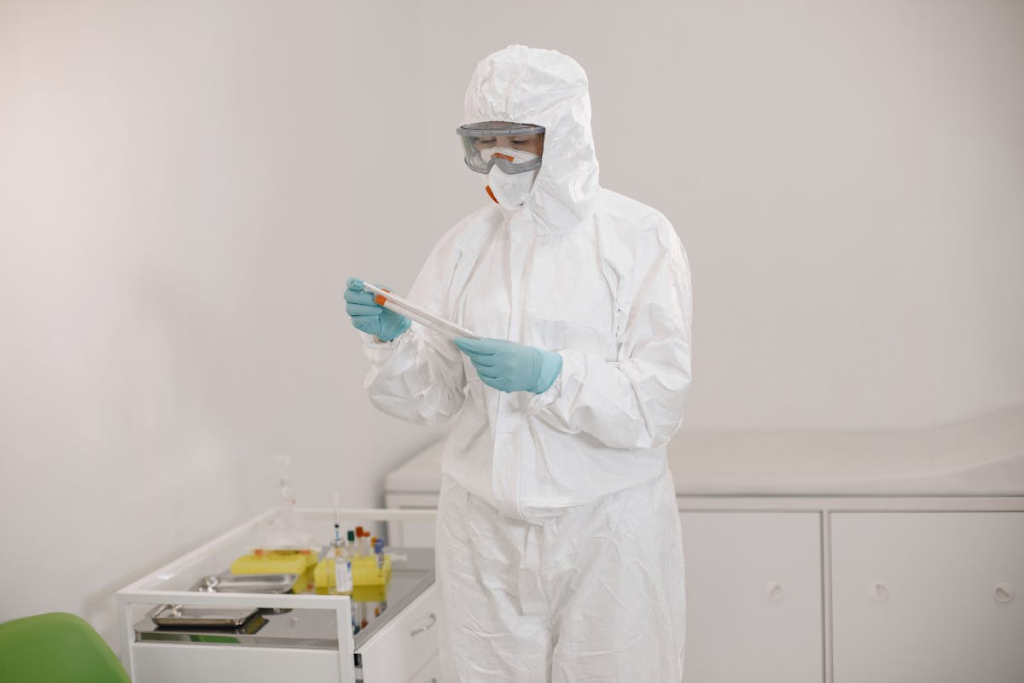
As you may have guessed already, the two types require completely different monitoring approaches.
Non-viable particle monitoring is done using laser particle counters, which work by passing air through a laser beam and detecting particles by the light they scatter. These instruments are fast, continuous, and don’t require any incubation or lab analysis. They give you real-time data on particle concentration and are the basis for ISO 14644-1 compliance.
Viable particle monitoring is more involved. Because identifying living organisms requires culturing, there’s no equivalent of a real-time particle counter for viable contamination.
Common methods include active air sampling, where air is drawn through an agar plate and the result incubated and counted, as well as settle plates, which are left exposed for a set period and then incubated, and contact plates, which are pressed against surfaces to capture microorganisms directly. Personnel monitoring (finger dabs and gown sampling) is also used in stricter environments.
The practical consequence of this difference is that viable monitoring results are never immediate. Samples need time to incubate before colonies can be counted, which means a contamination event may not be detected until hours or days after it occurred.
What This Means for Your Cleanroom
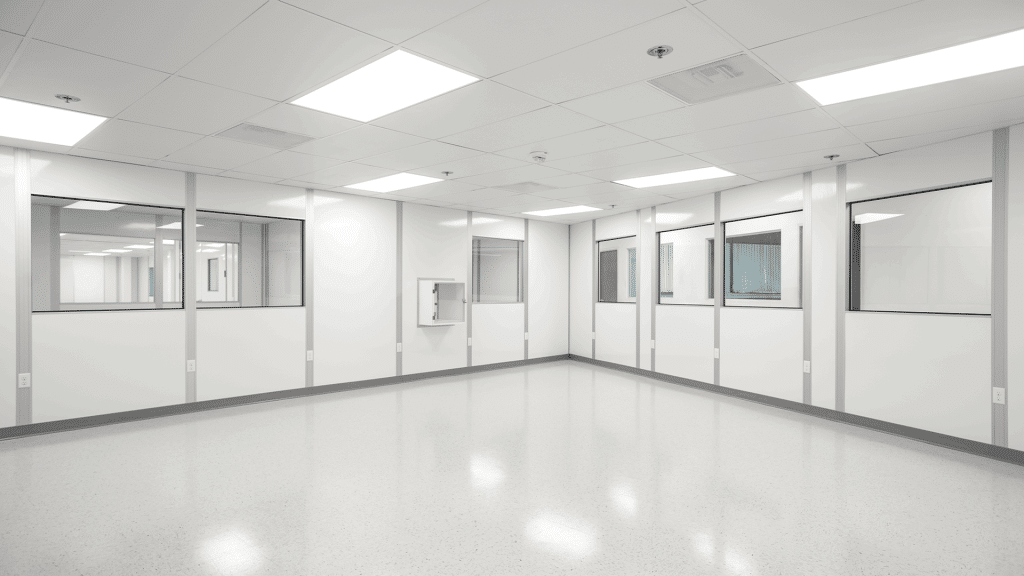
The design of your cleanroom affects both particle types simultaneously.
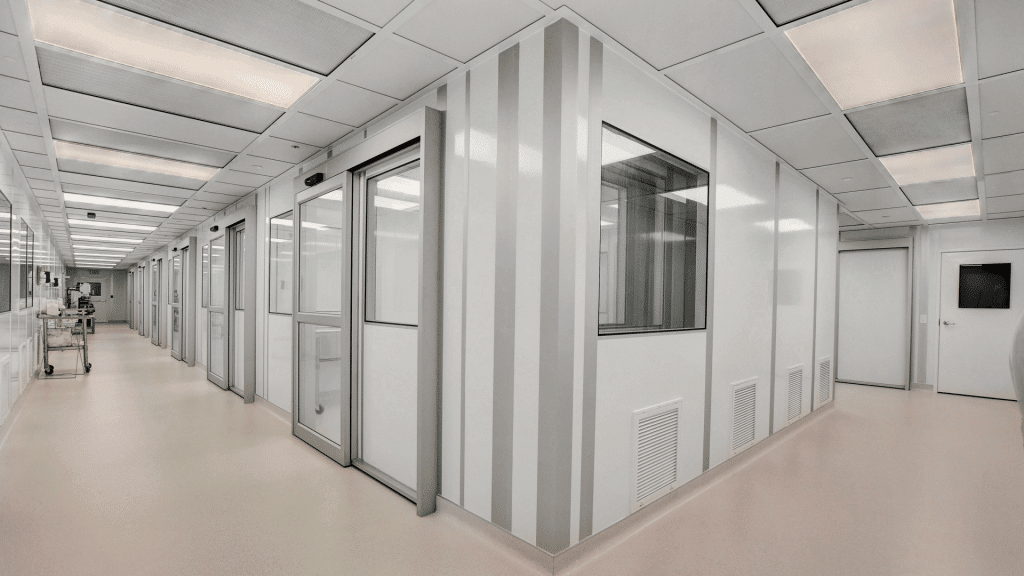
HEPA filtration removes airborne particles, both viable and non-viable alike. Unidirectional airflow sweeps particles away from important work areas before they can settle. Positive pressure differentials prevent unfiltered outside air from entering. Non-shedding wall and flooring materials reduce the non-viable particle load.
Also, adding buffer spaces or gowning rooms can help reduce the amount of contamination personnel bring in with them, which has a direct downstream effect on both particle types inside the cleanroom itself.
At Allied Cleanrooms, we design and build modular cleanrooms with contamination control built in from the start, including integrated gowning rooms, proper airflow design, and material selection suited to your ISO classification and industry requirements.
The Bottom Line
Viable and non-viable particles are two sides of the same contamination problem. Non-viable particles are the foundation of ISO classification and can carry living microorganisms. Viable particles are the biological risk that pharmaceutical and biotech cleanrooms are most concerned with. Controlling both starts with understanding how they’re connected, and designing a cleanroom that addresses them together.