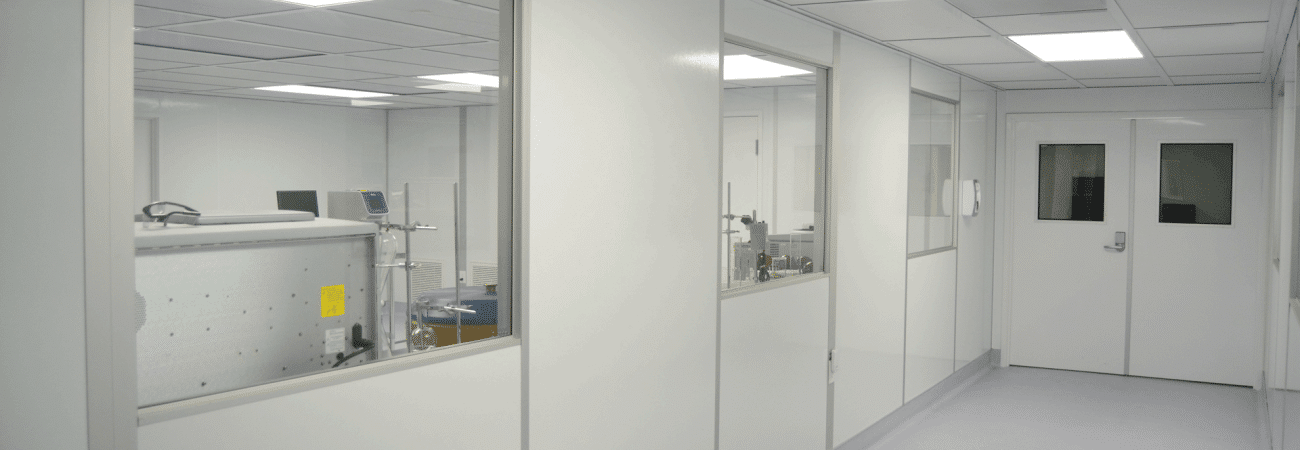
If you’re thinking of building a modular cleanroom, you should know that there’s a lot that happens between deciding you need one and actually having it operational. Knowing how the process works ahead of time can save you from mistakes and lost time.
In this article, we’ll walk through each stage, from design through commissioning.
Begin With Your Requirements
The first step in the process is usually one that doesn’t get its proper share of time, but which couldn’t be more essential to getting the job done right.
Before anything gets designed or built, the first step is understanding what you actually need.
This means defining things like your ISO classification, the size of the space, what processes will take place inside, how many people will be working in it, and what regulations apply.
Typically, this is where the User Requirement Specification (URS) comes together. If you don’t know, it’s essentially a document that spells out everything the cleanroom needs to do and comply with.
The more thorough this step is, the fewer problems show up later. Skipping over details here is one of the most common reasons cleanroom projects get delayed.
Design
Once you’ve completed your URS and have understood what you need, you can start the design phase.
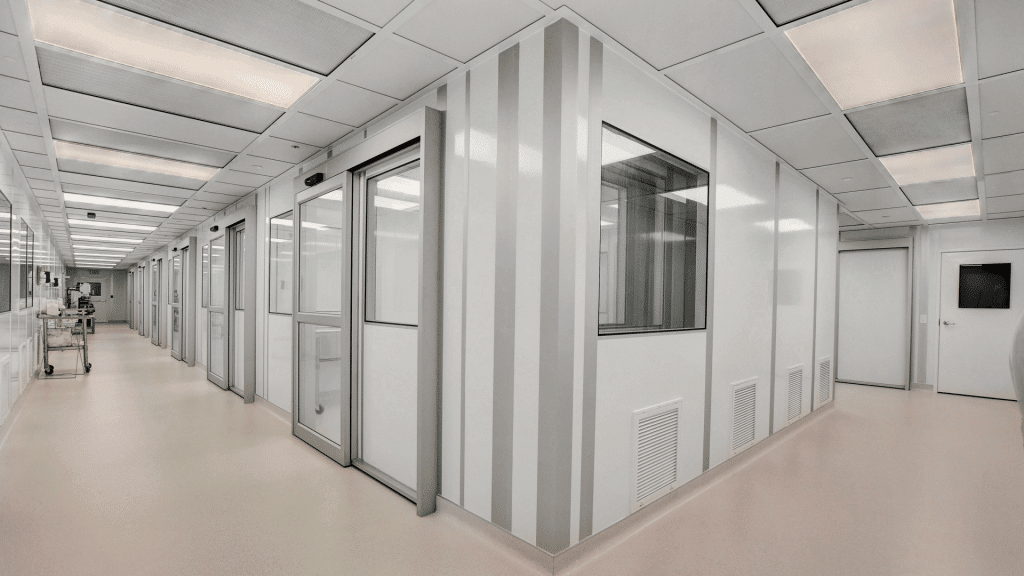
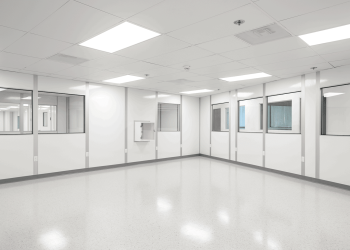
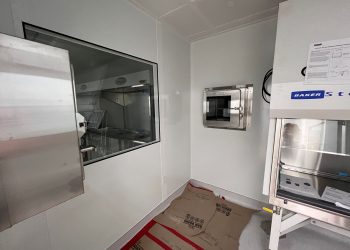
Your manufacturer’s design team works out the layout, including where to place airlocks, gowning rooms, pass-through windows, and doors. They select wall panel materials, ceiling systems, and flooring based on your ISO classification. Airflow design is mapped out, including FFU placement, air change rates, and pressure cascades. HVAC, lighting, electrical, and monitoring systems are all accounted for as well.
When the design is complete, your team reviews it. This is the time to flag anything that needs to change.
Once it’s approved, it moves into fabrication.
Fabrication
This is where modular construction separates itself from traditional building methods.
Instead of building the cleanroom on-site from raw materials, all of the parts (or “modules”) are manufactured off-site in a controlled (factory) environment. Wall panels, ceiling systems, doors, windows, and framing are all built to the exact specifications laid out in the design.
And because this happens in a factory, QC is tighter than what you’d get on a construction site. There’s no inclement weather to deal with, and no coordination with other trades. Not to mention anything about the dust, debris, and loud noises that come hand-in-hand with any normal construction job.
There’s also another advantage that’s often overlooked, namely that fabrication can happen at the same time as the site is prepared. In other words, while the panels are being built in the factory, your facility can be getting the floor, utilities, and infrastructure ready.
This overlap is a big part of why modular projects move faster.
Shipping and Delivery
Once fabrication is finished, the parts are packaged, labeled, and shipped to your site.
Everything then arrives ready to be assembled, with each piece marked such that the installation team knows exactly where it goes and in what order.
Installation
Because everything has been pre-engineered and pre-fabricated to fit together, installation moves quickly. The walls go up, the ceiling grid is set, FFUs and lighting are mounted, HVAC connections are made, and the flooring is finished.
For a typical hardwall modular cleanroom, this can take anywhere from a few days to a few weeks, depending on the size and complexity. Softwall cleanrooms should be even faster.
What’s more, because there’s no cutting, sanding, or welding happening, the installation process itself generates far less contamination than traditional construction, which makes the transition to commissioning and testing smoother.
Commissioning and Certification
Finally, once the cleanroom has been built, you need to prove that it works.
Commissioning is exactly that. It’s the process of verifying that all systems, including HVAC, filtration, airflow, pressure differentials, and environmental controls, are working the way they were designed.
After commissioning, a third-party testing firm does certification to confirm the cleanroom meets its target ISO classification. (We’ve written about this process in more detail in our article on cleanroom commissioning, but the short version is that it typically adds another one to two weeks to the project.)
Stricter classifications like ISO 5 require more sampling points and more verification, so they take a bit longer than an ISO 7 or ISO 8.
The Bottom Line
Modular cleanroom construction follows a straight path, from design to commissioning. Each step feeds into the next, and because most of the work happens off-site, the whole process is faster and less disruptive than traditional construction.