A cleanroom can look finished and still not be ready to use. Given that cleanrooms are heavily regulated spaces, there needs to be a way to confirm that everything works. And this is essentially what the commissioning process is for.
In this article, we’ll discuss what cleanroom commissioning is, why it’s an important process in getting a cleanroom up and running, what gets tested, and how it differs from qualification and validation.
What Is Cleanroom Commissioning?
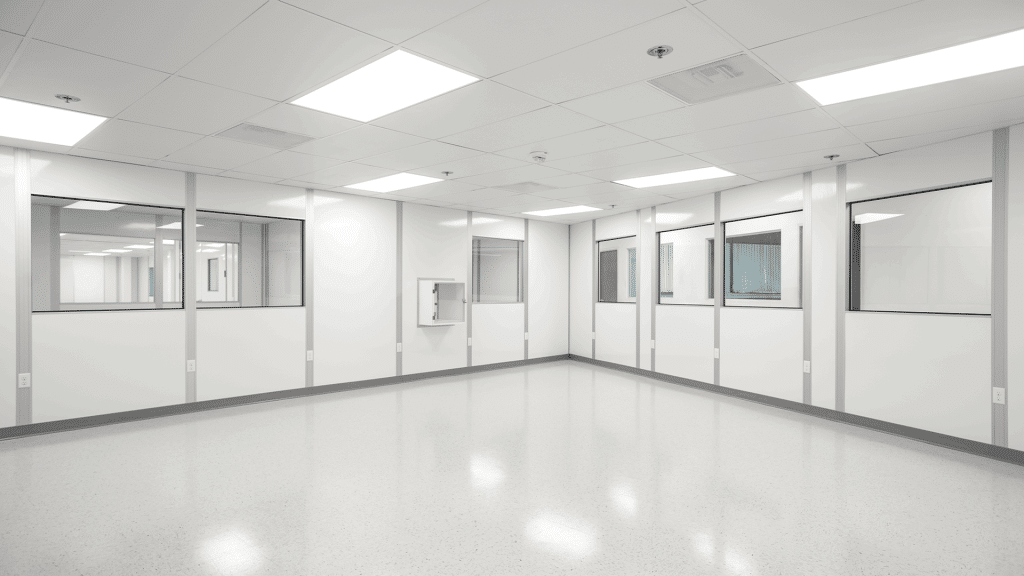
The easiest way to think of cleanroom commissioning is as the process of verifying that a newly built cleanroom was made correctly, or that it works as designed. It covers a wide range of aspects within the cleanroom, including HVAC/filtration systems, airflow, pressure differentials, and environmental control.
The process itself takes place after construction but before the cleanroom is put into service. Another way to think about it is as running final checks.
What you’re essentially doing is confirming that what was built actually matches what was specified in the URS, and that all of the systems are working as they ought to.
Though they sound related, commissioning is not the same as qualification or validation, but we’ll get into that distinction later.
Why Is Commissioning Important?
Without commissioning, as you may well imagine, problems are liable to show up later during qualification, or worse, in the middle of production. Of course by this time it is too late, and they’re much more expensive to fix.
The purpose of a commissioning process is to catch such issues early. Without it, you might not realize until much later that your HVAC isn’t delivering the right air volume, or that a filter wasn’t seated correctly, or that the pressure between zones isn’t holding.
These are all things you want to find and rectify before anyone starts working inside.
What’s more, it’s a regulatory expectation. ISO 14644, GMP, and FDA guidelines all expect documented evidence that the cleanroom was verified before it went into operation.
What Exactly Gets Tested During Commissioning?
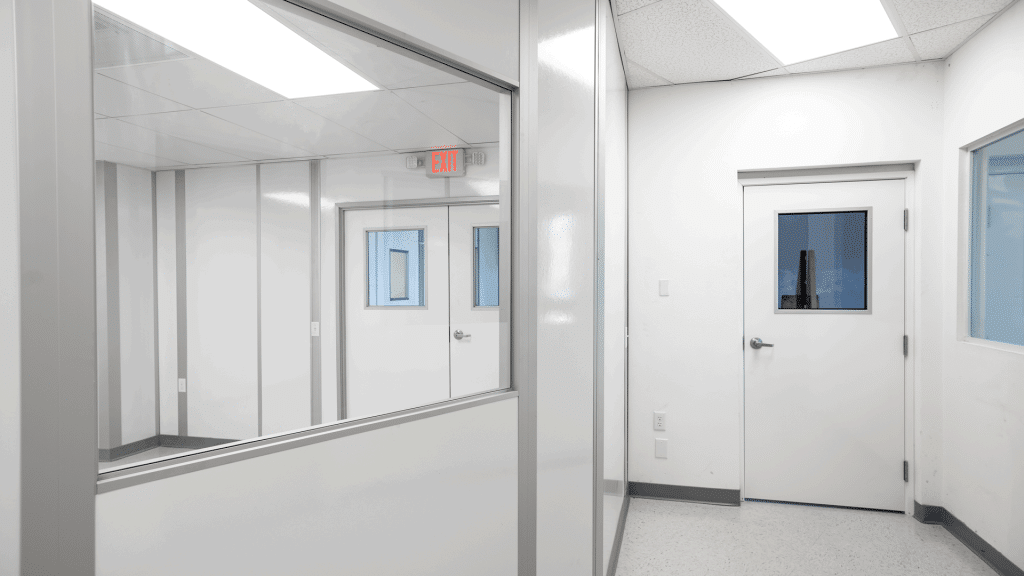
Commissioning takes into consideration the most important systems in a cleanroom. Here’s what’s typically included:
- HVAC systems. Are heating, ventilation, and air conditioning systems installed correctly? Are they delivering the right air volume, temperature, and humidity?
- HEPA and ULPA filtration. Filter integrity testing is performed to confirm that filters are properly seated and free of leaks.
- Airflow. Technicians measure air velocity, check uniformity, and confirm that airflow is moving in the right direction.
- Pressure differentials. The pressure cascade between different areas of the cleanroom is checked to make sure air flows from cleaner areas to less clean ones.
- Particle counts. Initial counts are taken to confirm that the space meets its target ISO classification before going into operation.
- Lighting, electrical, and controls. Alarms, monitoring equipment, and automated controls are all verified for proper function.
All of these test results are recorded. This documentation becomes part of the cleanroom’s permanent record and will be referenced during qualification and audits.
Commissioning vs. Qualification vs. Validation

These three terms are confused often, and not for no reason. Without a careful reading they all appear as more or less the same thing. But here’s an easy way to think about them.
You can think of commissioning as making sure that everything has been built correctly. In other words, did the cleanroom get completed as designed? And are all the systems installed and working properly? At bottom, it is an engineering check.
Qualification, on the other hand, confirms the performance of the cleanroom in various conditions. Through a series of stages (IQ, OQ, and PQ), it checks that the cleanroom performs within its specified parameters under defined conditions.
Finally, validation confirms the process. In other words, it demonstrates that the actual work being done inside the cleanroom, whether that’s manufacturing, compounding, or research, produces consistent and reliable results over time.
They happen in this order, too. Commissioning comes first. If the commissioning fails, there’s no point moving on to qualification.
How Cleanroom Design Affects Commissioning
Furthermore, the quality of your cleanroom’s design has a direct and outsized impact on how easy commissioning is.
Obviously, if it was built well and according to the agreed upon design, the commissioning process is faster. A cleanroom built with shortcuts tends to yield more problems. And every issue that comes up will cost time and money to fix.
This is one area, among others, where modular cleanrooms have an edge over traditionally built spaces. Because the parts are “modular,” that is, pre-engineered and factory-tested before they arrive, there are fewer surprises during commissioning. The panels, HVAC connections, and filtration systems are all built to known specifications.
The Bottom Line
To put it simply, commissioning is the process of making sure your cleanroom actually works as designed before it goes into operation. A cleanroom that was designed and built well will move through it with fewer problems, and be ready for use sooner.