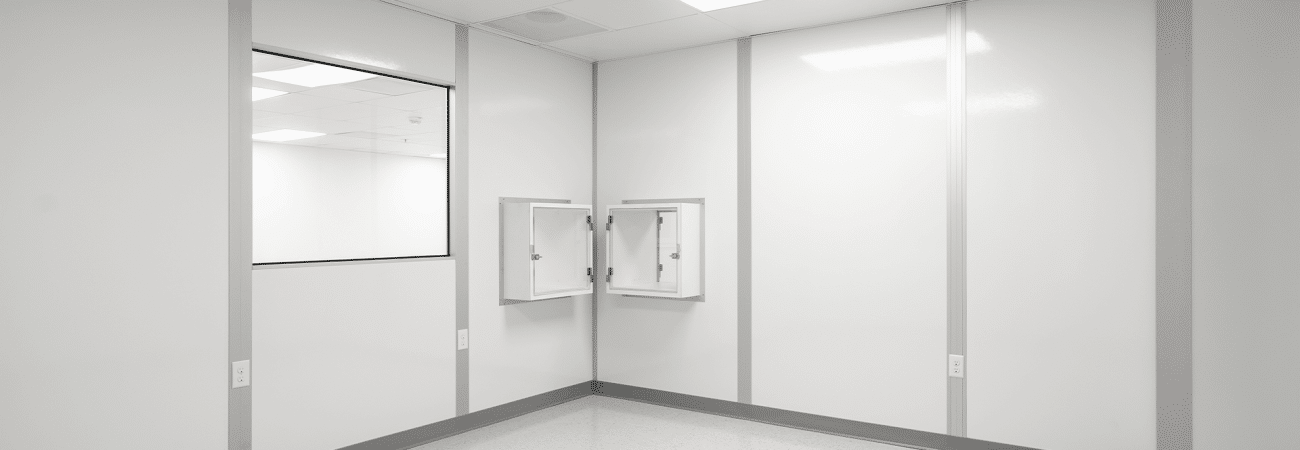
GMP cleanroom grades (A, B, C, and D) determine what kind of environment your pharmaceutical cleanroom needs to be. If you’re building or upgrading a space, understanding them should be the starting point before anything else.
In this article, we’ll cover what each grade means, their ISO equivalents, and what they mean for your cleanroom design.
What Are GMP Cleanroom Grades?
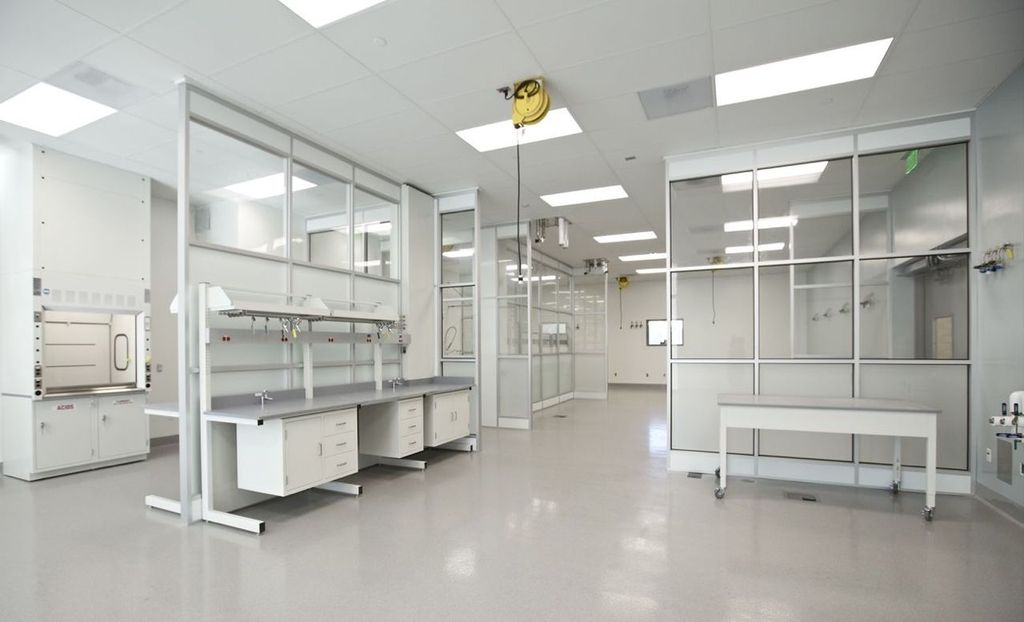
GMP stands for “Good Manufacturing Practices,” a set of regulations that make sure pharmaceutical products are consistently produced and quality controlled.
Within GMP, cleanrooms are classified into four grades: A, B, C, and D. These grades come from EU GMP Annex 1, a European regulatory document.
However, even though it originates in Europe, it’s still widely followed by pharmaceutical manufacturers around the world.
Each grade is defined by the importance or critical nature of the work performed inside. In other words, the more vulnerable the product is during the operation, the stricter the grade will be.
The grades also map to ISO 14644 classifications, which gives manufacturers a common reference point across both systems.
One concept that comes up throughout the GMP grade system is the difference between “at rest” and “in operation.”
“At rest” means the room is set up and running (along with equipment) with no personnel present, while “in operation” means the room is used as it would be when fully operational, including equipment and personnel.
Many grades have different particle limits for each state, which we’ll cover below.
Grade A
Grade A is the strictest of the four grades. It’s reserved for the most important operations in pharmaceutical manufacturing, i.e., where the risk of contamination is highest.
Typical applications: Aseptic filling, open handling of sterile products, compounding of sterile preparations.
ISO equivalent: ISO 5, in both the “at rest” and “in operation” states.
Particle limit: No more than 3,520 particles per cubic meter (≥ 0.5 µm), regardless of state.
From a design standpoint, Grade A conditions are typically achieved using laminar airflow (LAF) hoods, isolators, or RABS (Restricted Access Barrier Systems) rather than a standalone, full-on cleanroom.
Grade A is almost always housed within a Grade B background environment.
Grade B
Grade B, as we just mentioned, often serves as the background environment for Grade A zones. It’s the space that surrounds and supports aseptic processing areas.
Typical applications: Background environment for aseptic processing, support areas adjacent to Grade A zones.
ISO equivalent: ISO 5 at rest, ISO 7 in operation.
Particle limits:
- At rest: 3,520 particles per cubic meter (≥ 0.5 µm)
- In operation: 352,000 particles per cubic meter (≥ 0.5 µm)
Grade B rooms require tight HVAC control, strict gowning procedures, and carefully designed personnel and material flow.
The jump from ISO 5 at rest to ISO 7 in operation reflects the contamination introduced by personnel during work.
Grade C
Grade C is used for less critical stages of sterile drug production, where the risk of contamination is lower but still needs some protection.
Typical applications: Preparing solutions that will be subsequently filtered, handling components before sterilization.
ISO equivalent: ISO 7 at rest, ISO 8 in operation.
Particle limit: 352,000 particles per cubic meter (≥ 0.5 µm) at rest.
Grade C spaces are less demanding to build and operate than A or B, but still require solid HVAC design, pressure cascades, and appropriate filtration.
Grade D
Grade D covers the least critical areas in sterile manufacturing, as in spaces used for lower-risk activities.
Typical applications: Initial component handling, washing areas, gowning rooms.
ISO equivalent: ISO 8 at rest.
Particle limit: 3,520,000 particles per cubic meter (≥ 0.5 µm) at rest.
One thing worth noting about Grade D is that in-operation particle limits are not set by regulations. Instead, the manufacturer determines them based on a risk assessment and their own operational data.
This makes Grade D the most flexible of the four grades from a compliance standpoint.
What This Means for Your Cleanroom
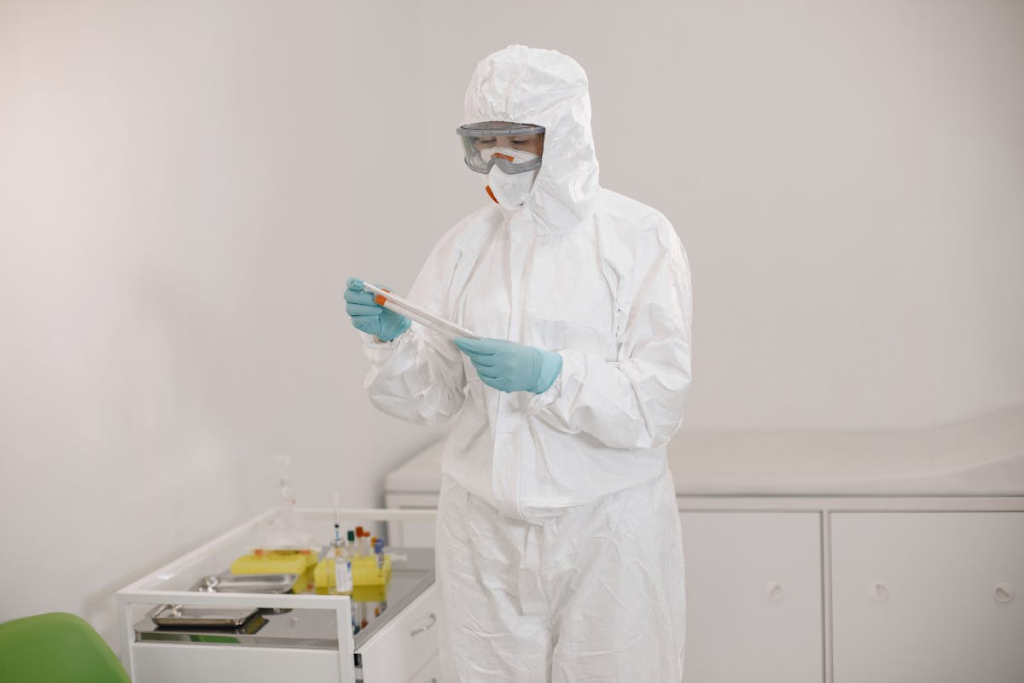
GMP grades directly affect how your cleanroom needs to be designed and built.
Each grade comes with specific requirements for HVAC systems, filtration, air change rates, pressure differentials, materials, and more. Getting the grade wrong at the design stage is an expensive mistake. Building a Grade B room when you need Grade A, or over-engineering a Grade D space, will both cost extra time and money.
One thing worth keeping in mind early in the process is that Grade A conditions are rarely achieved with a standalone room (they typically require an isolator or LAF hood within a Grade B environment). As a result, it is usually Grade B rooms that require the most rigorous design, and that are the most expensive to build and operate. Grades C and D are more accessible, but still require careful planning to pass qualification.
Allied Cleanrooms has over 30 years of experience building cleanrooms to GMP standards. If you’re planning a new space or trying to understand what grade you need, contact us today for a free consultation.