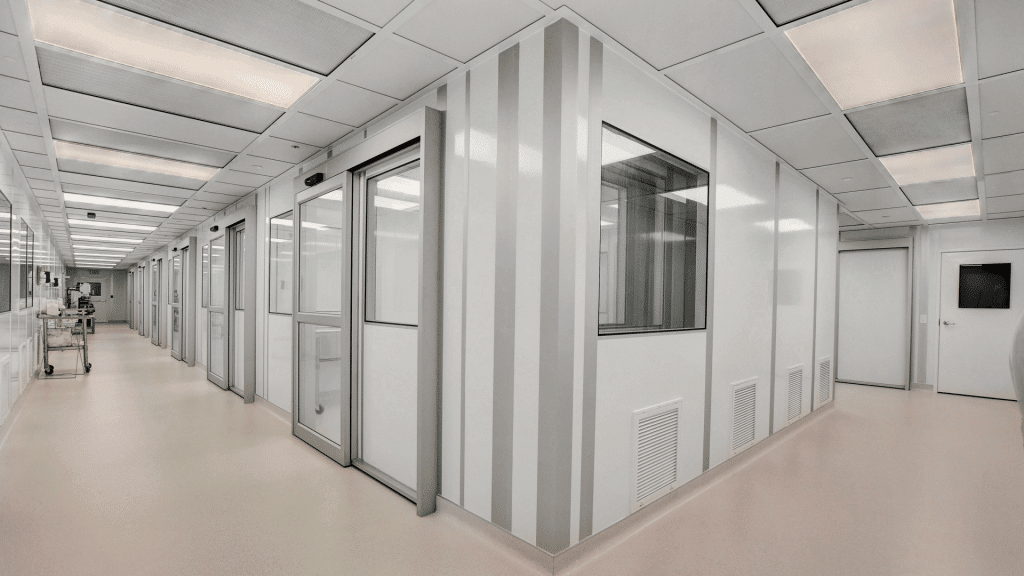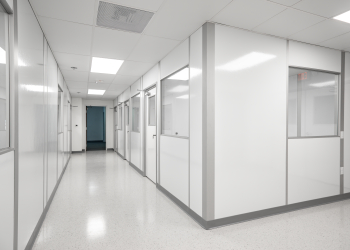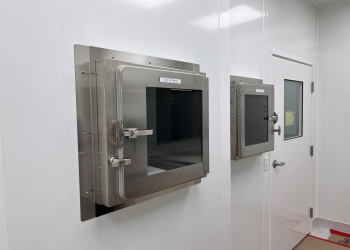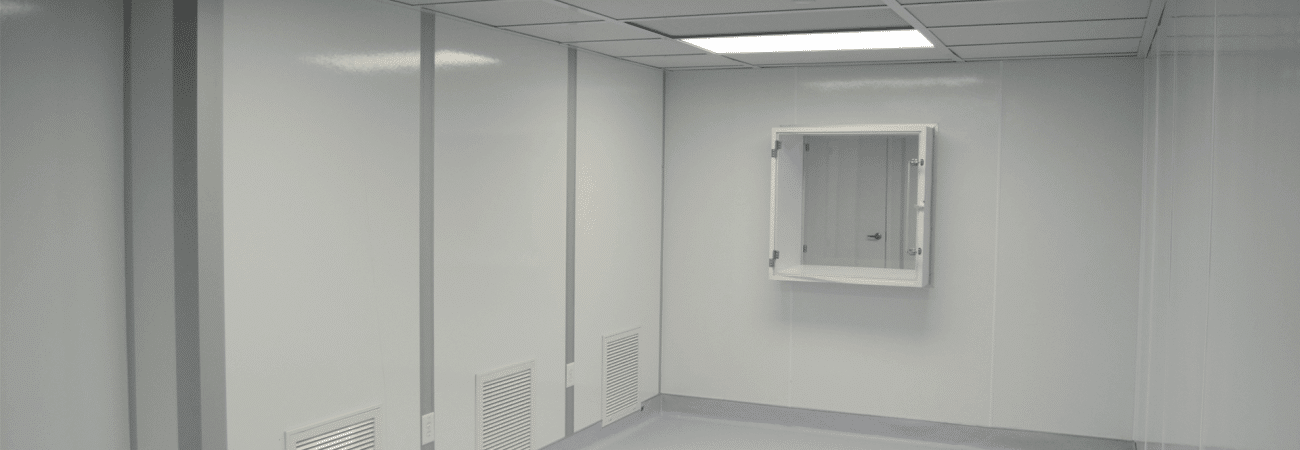
Just because a 503B cGMP cleanroom passes an initial certification, it can still later fail an FDA inspection. More often than not, the problem can be traced back to how it was designed.
For 503B outsourcing facilities, the FDA expects evidence of ongoing control. If the design does not make compliance easy, then risks compound over time.
In this article, we’ll cover how 503B cleanrooms differ from 503A, the ISO classification structure most facilities use, the important design elements for compliance, what FDA inspectors actually look for, and more.
How 503B Cleanrooms Differ from 503A Cleanrooms
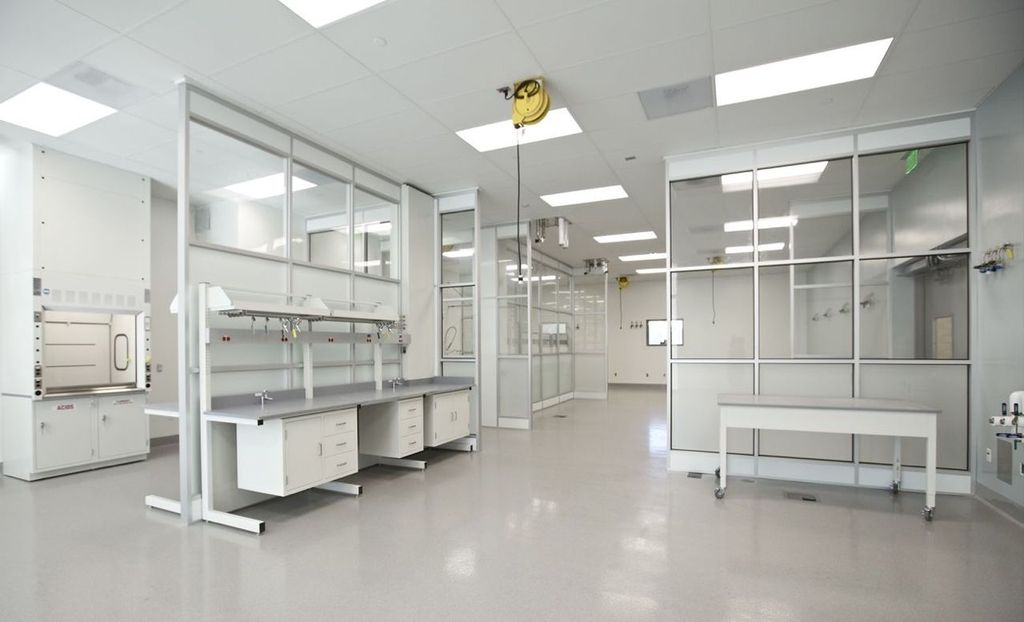
Whereas a 503A pharmacy has to answer to its state board of pharmacy, and has to follow USP 797 and sometimes USP 800, a 503B facility needs to operate under federal manufacturing rules. In other words, 503B pharmacies are subject to FDA and cGMP regulations.
The difference between 503A pharmacies and 503B outsourcing facilities shows up in their cleanrooms.
For example, operating as a 503B facility requires you to:
- Keep clear production records
- Monitor both viable and nonviable particle levels
- Validate aseptic processes
- Track pressure differentials and airflow
- Address and document deviations when something goes out of range
FDA inspectors will review things like smoke studies, environmental monitoring trends, cleaning procedures, and qualification records.
The cleanroom has to be designed so these activities are part of normal operations, not something you merely have to document during an inspection.
ISO Classifications in a 503B Sterile Compounding Area
Most 503B facilities create a layered approach based on ISO 14644-1.
It typically works as follows.
At the “core” of the cleanroom, where the sterile product is most exposed during processes like filling or compounding, the area is usually ISO 5. But the entire space need not have this classification. Often, laminar flow cabinets, isolators, or other barrier systems (which create unidirectional airflow) are used for this purpose.
Surrounding the ISO 5 space is an ISO 7 buffer room, which functions as a background space for the ISO 5 zone.
Finally, outside of the ISO 7 space is an ISO 8 anteroom, used for things like gowning and material staging.
The ISO layers are only part of the picture, of course. The HVAC system also has to maintain the right pressure relationships between each space, and if hazardous drugs are involved, USP 800 will require negative pressure in the relevant areas.
Important Cleanroom Design Elements in a 503B Facility

A 503B cleanroom has to do a lot more than reach certain particle counts on certification day. It has to be designed to meet requirements continuously, day in and day out. Here are a few of the most important design elements it uses to achieve this:
- HEPA/ULPA Filtration: Special filters that act as the “backbone,” so to speak, of a cleanroom. They are responsible for removing lingering particles from the air.
- Pressure Control: Keeping the right pressure differentials between spaces ensures that particles flow in the right directions. They must also be stable, measurable, and continuously monitored.
- Smooth, Cleanable Surfaces: Surfaces such as walls, ceilings, and flooring need to be smooth and sealed so that particles cannot accumulate, and they must also be made with the right materials, such that they can withstand repeated cleaning with disinfectants and other agents.
- Layout: Another important factor is how personnel and materials will move throughout the space, of which designing layouts is a part; this will also include gowning sequences.
- Access for Testing: An underrated aspect of cleanroom design is that it should make HEPA filters and other sampling locations easy to access, so that requalification is smooth.
When we design modular cleanrooms for 503B facilities, we put these elements (and more) into the building from the start. The goal is not only to pass initial certification, but to make long-term compliance more manageable.
What the FDA Looks for During Inspections of 503B Pharmacies
When they come, FDA inspectors do not only check to make sure your space is clean. They also need evidence that you are in control of it.
That means they will want to see your airflow visualization studies (and so on), not just that you ran them, but that the air moves the way your design says it should.
They will also pull environmental monitoring data and look at whether you are actually reviewing trends and following up on anything that goes out of range. Qualification reports, cleaning records, and deviation logs are all on the table.
As we’ve mentioned already, this is why cleanroom design matters beyond certification day.
A room that is hard to monitor, hard to test, or hard to document does not stay in compliance for long. The design decisions you make at the beginning will affect how manageable FDA scrutiny becomes later on.
Modular Cleanrooms for 503B Facilities
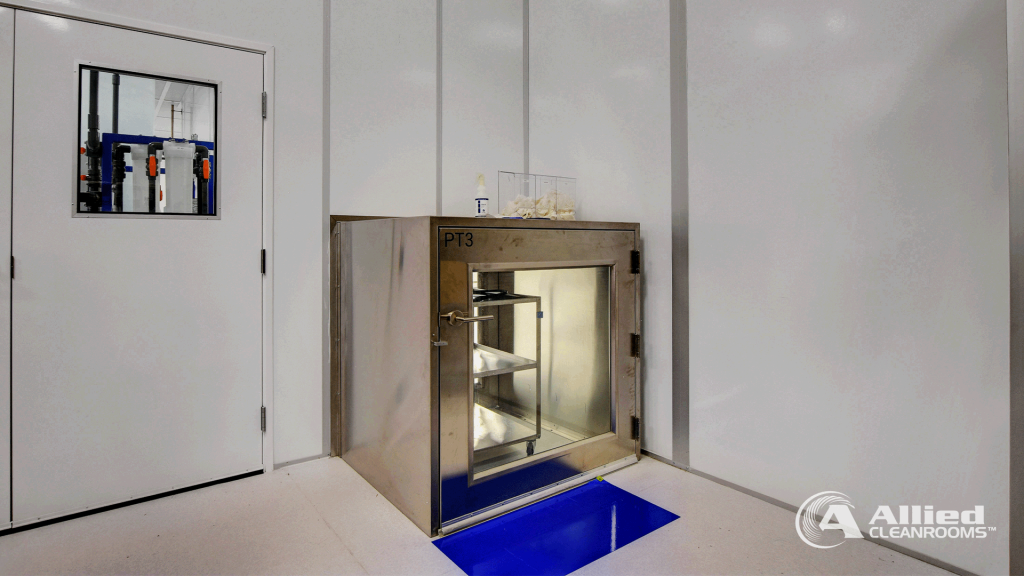
Modular cleanrooms can meet the same ISO classifications and cGMP expectations as a traditional build. For most 503B pharmacies, modular construction means predictable timelines, easier future expansion, and a cleanroom designed as a complete system rather than created piece by piece on site. At Allied Cleanrooms, we begin designing cleanrooms around FDA expectations from day one.
503B cGMP cleanrooms are more than just sterile spaces with HEPA filters. They are heavily regulated manufacturing environments, subject to federal inspections. It is imperative that each cleanroom be designed properly for ISO classification, airflow control, environmental monitoring, validation, and documentation from the start.
FAQs About 503B cGMP Cleanrooms
Can an existing 503A cleanroom be upgraded to meet 503B requirements?
Sometimes it can be, but ultimately it depends on how the original cleanroom was built. 503A cleanrooms are designed to meet USP 797 standards, which are less strict than FDA cGMP requirements. These are often big gaps to fill. An on-site inspection is usually needed to determine whether an upgrade is feasible or not.
What is the difference between a modular and a traditional cleanroom build?
A traditional cleanroom is built in place using conventional construction methods, with framing, drywall, etc., all coordinated on site. A modular cleanroom uses prefab panels and parts, “modules,” that are assembled on site. Both can meet the same ISO classifications and cGMP requirements. The difference lies mostly in how they are built. For 503B facilities, modular construction can also make future expansion easier, since the system is designed to be reconfigured.
How much does a 503B cleanroom cost?
There is no single answer, since cost depends on factors like size, ISO classification, materials, and HVAC requirements. For a full breakdown of what drives cleanroom costs, see our guide here.