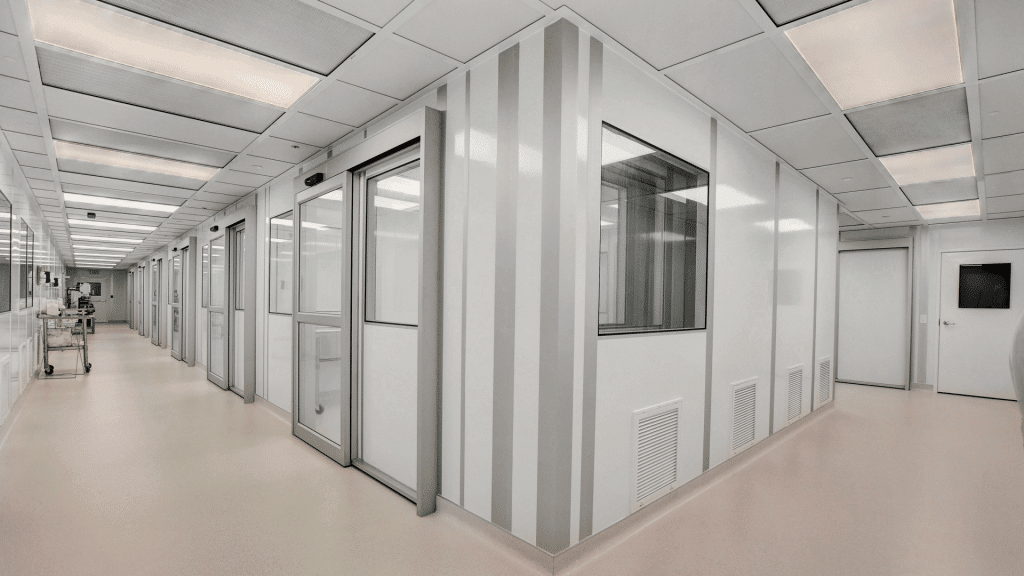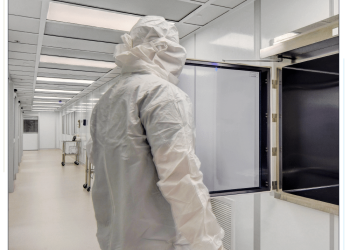
Lithium battery manufacturing is one of the fastest growing industries in the world, given the rise of electric vehicles. It’s also particularly demanding when it comes to controlled environments. While it is common for cleanrooms to control humidity to some extent, battery manufacturing takes this to an extreme, and requires dew points that go far below what pharmaceutical or semiconductor cleanrooms ever need.
In this article, we’ll cover why lithium battery production needs cleanrooms, what ISO classifications are relevant, what makes these spaces different, and what to think about when designing one.
Why Battery Manufacturing Needs Cleanrooms
In most cleanrooms, contamination can cause problems with products. But in battery manufacturing, particles can be a safety issue.
For example, if a metallic particle lands on a battery separator, it can cause an internal short circuit. That short circuit can lead to thermal runaway, which in plain terms means the battery catches fire or explodes. These kinds of risks are why battery manufacturers invest so heavily in controlled environments.
Moisture can be equally as dangerous, since lithium reacts with water, sometimes creating hydrofluoric acid. (It can burn the skin of humans and even cause cardiac arrest.)
But even in less extreme scenarios, a small amount of humidity during manufacturing can reduce battery performance, or else cause cells to fail.
These are some of the main reasons why battery manufacturers need controlled environments that handle both particles and moisture.
In the industry, you’ll often hear these referred to as “C&D rooms,” which stands for clean and dry rooms.
ISO Classifications for Battery Manufacturing
Different stages of the manufacturing process require different levels of cleanliness. Here’s a rough idea of what ISO class is needed by different processes:
- ISO Class 5–6: Electrode coating, active material handling, and cell assembly
- ISO Class 7: Cell assembly, electrolyte filling, and stacking/winding
- ISO Class 8: Slurry mixing, module and pack assembly, and packaging
Of course, the right classification will depend on many factors, including the type of battery, relevant industry standards, as well as the sensitivity of the materials in each stage.
The Dry Room Factor
Now for what makes this type of cleanroom unique.
While a standard cleanroom controls particles, temperature, and sometimes humidity, a lithium battery cleanroom has to go much further on the humidity side.
Dry rooms for battery manufacturing maintain humidity below 1% relative humidity, with dew points typically between -35°C and -45°C during cell assembly. For electrolyte filling, dew points can drop to -60°C or even lower.
To put this into perspective, a normal office sits around 30 to 60 percent relative humidity; or, consider a pharmaceutical cleanroom, which might control humidity to around 30 to 50 percent.
All this is supposed to show is that a battery dry room is trying to remove moisture from the air almost entirely.
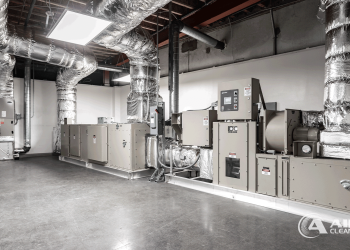
This is not that easy to achieve, either. The cleanroom will generally need specialized desiccant-based dehumidification systems, the running of which can get quite expensive. In fact, the energy cost of maintaining a dry room is one of the largest operating expenses in battery production.
In many battery facilities, the cleanroom and dry room functions are combined into a single space. The standard HEPA filters handle the particle side of the equation, while the dehumidification system handles the moisture.
Other Design Considerations
Outside of particles and moisture, lithium battery cleanrooms have a few other requirements that set them apart from most other cleanrooms. Here are some other common features:
Electrostatic discharge (ESD) control. Also common in electronics cleanrooms, battery parts also need protection against static electricity. We already discussed how humidity has to remain low in these spaces, and this makes ESD control all the more important, as dry air significantly increases static buildup. As a result, these cleanrooms typically need ESD flooring, grounding systems, and ionization equipment. In many cases, staff need to wear anti-static garments.
Flammable solvents. Some stages of battery manufacturing use solvents like NMP (N-methyl-2-pyrrolidone) for electrode coating. These solvents produce flammable vapors, which means some areas of the cleanroom may require explosion-proof electrical systems.
Pressure cascades. Like any cleanroom, battery production spaces need directional airflow from cleaner zones to less clean ones. But the layout has to account for the dry room integration, making the pressure and airflow design more complex than a standard cleanroom.
Scalability. Battery production is growing fast. Gigafactories are being built around the world, and many of them need cleanroom space that can expand as production ramps up. Modular cleanroom construction is well suited for this because sections can be added or reconfigured without tearing down what’s already in place.
The Bottom Line
Lithium battery cleanrooms are among the most demanding controlled environments to design and build. Particle control, extreme humidity control, ESD protection, and in some cases explosion-rated equipment all have to work together in the same space. Getting the design right from the start matters here more than most other cleanroom applications, because retrofitting any of these systems after the fact can get both costly and disruptive.