If you’re planning on building a cleanroom, one of the most important aspects of design is figuring out how the air will be filtered and moved through the space. The two common options are fan filter units (FFUs) and air handling units (AHUs). Both have the same purpose, to control or limit the number of lingering particles, but they don’t quite work in the same way.
Choosing the right system can affect how efficient your cleanroom works, how easy it is to maintain, and even how simple (or difficult) it is to expand later.
In this article, we’ll cover the main differences between the two, and where each one makes the most sense.
What Is an Air Handling Unit?
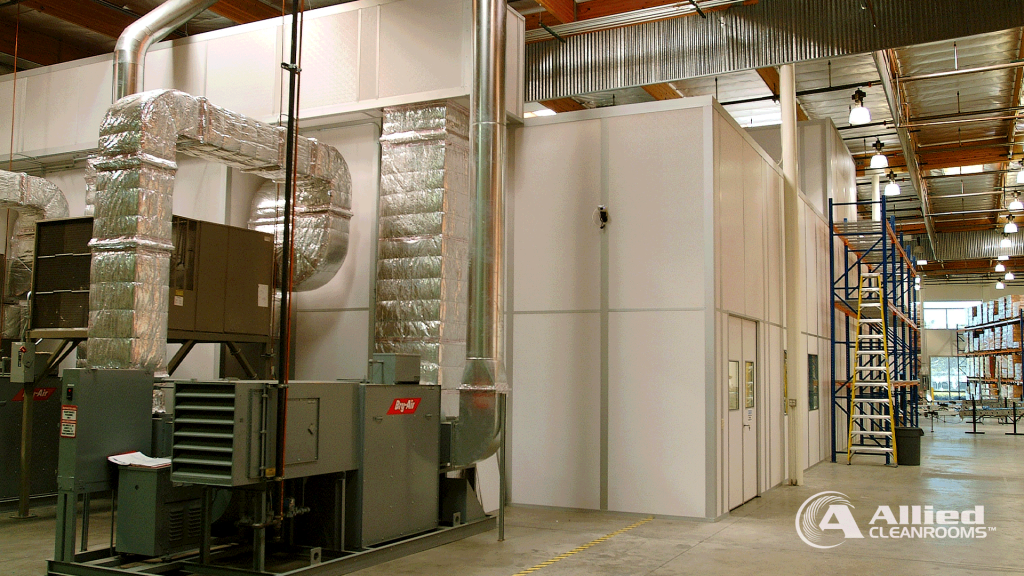
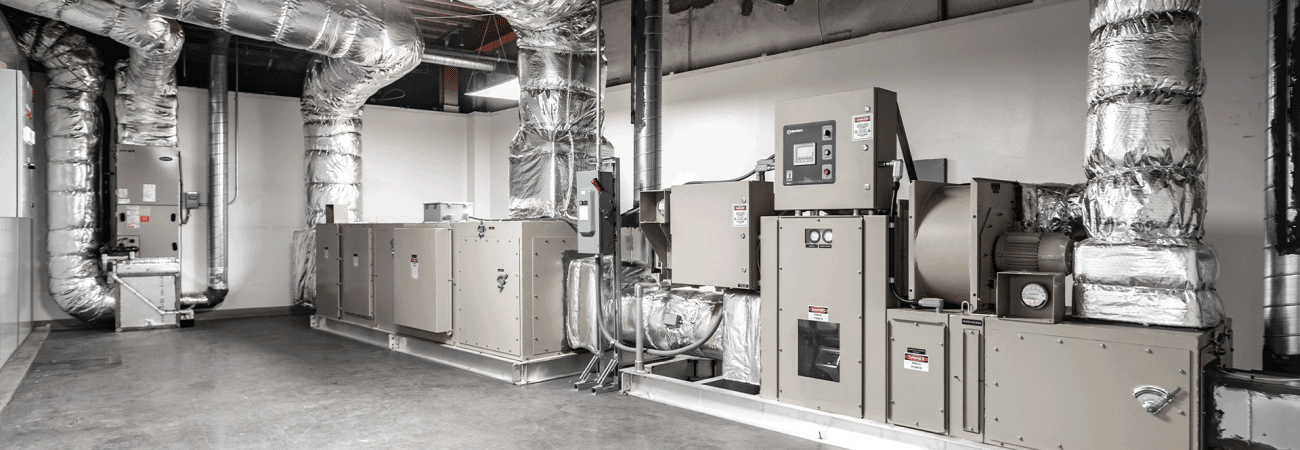
An air handling unit, or AHU, is a central part of the air system for many buildings and controlled spaces. In a cleanroom, it often works as a central unit that processes and delivers clean air.
AHUs may include fans, filters, heating and cooling coils, humidity control, sound attenuators, return or relief air sections, and more.
In cleanrooms specifically, AHUs do more than filter out particles. They also control other environmental conditions like temperature and humidity, and also control airflow.
What Is a Fan Filter Unit?
A fan filter unit, or FFU, is a much smaller unit. In cleanrooms, these are typically placed on the ceiling of the space, much closer than an AHU needs to be.
Each of these small units has its own fan and filter. The unit pulls in air, pushes it through the filter, and sends clean air into the room.
Most FFUs include a fan, a pre-filter, and a HEPA or ULPA filter.
Because each unit works on its own, FFUs are often a great fit for modular cleanrooms. You can place them across the ceiling as needed to meet the room’s cleanliness requirements.
Fan Filter Units vs Air Handling Units
When people compare fan filter units vs air handling units, what they’re really doing is comparing a couple different ways to control cleanroom air.
An air handling unit is part of a central HVAC system that heats, cools, and filters air before it reaches the cleanroom, while a fan filter unit is a self-contained ceiling unit that pushes filtered air directly into the room.
In short, AHUs treat air from a central point, while FFUs provide filtration closer to the space, usually in the ceiling of the cleanroom itself.
This difference also affects maintenance, since FFUs can often be serviced one unit at a time.
Which One Is Right for Your Cleanroom?
Unfortunately, there isn’t always a blanket answer to this question.
AHUs act as centralized units for air processing and filtration, while FFUs are individual units that deliver terminal filtration into the cleanroom.
In FFU-based systems, the HVAC system still controls temperature and humidity.
For modular cleanrooms, FFUs are often a strong fit because they can be installed across a grid ceiling and adjusted as cleanliness needs change.
In many cases, the best choice depends on the cleanroom layout, the required ISO classification, and how much flexibility the space needs over time.
The Bottom Line
Both fan filter units and air handling units have an important place in cleanroom design. AHUs treat air through a central system, while FFUs deliver filtered air directly into the cleanroom through individual ceiling units.
One is not always better than the other, and the right choice depends on your room, your process, and how you plan to use the space over time.