

USP 800 Cleanrooms
USP 800 compliant cleanrooms are designed to provide negative-pressure environments for hazardous drug compounding. At Allied Cleanrooms, we use systems with sealed, isolated panels that maintain proper pressure differentials and create a secure, airtight perimeter.
Typically, within the cleanroom, an ISO 5 containment hood or workstation is placed inside an ISO 7 buffer room, and the buffer room connects to an ISO 7 or ISO 8 anteroom in turn, which is used for gowning and staging.
Standards require a minimum pressure differential of -0.01 inches WC from surrounding spaces, and this is easily maintained by the stiff structure of modular panels. Exhaust air is expelled outside through HEPA filters, incorporated into the modular design to avoid the recirculation of contaminants.
Hazardous drugs (HDs) are stored in external, vented modular enclosures to prevent cross-contamination. These storage areas are also vented outside the USP 800 pharmacy envelope, all while preserving negative pressure. Nonsterile hazardous drugs are kept outside the buffer room and unboxed in designated ante-areas.
Our modular approach simplifies compliance auditing because our buildings are made in a factory with repeatable specifications.

Design & Features of USP 800 Cleanrooms
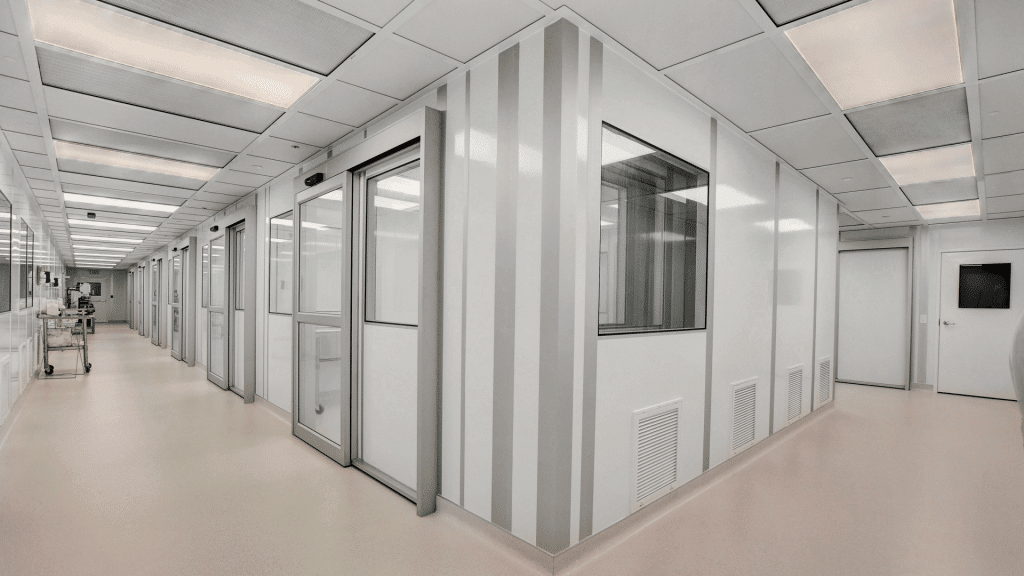
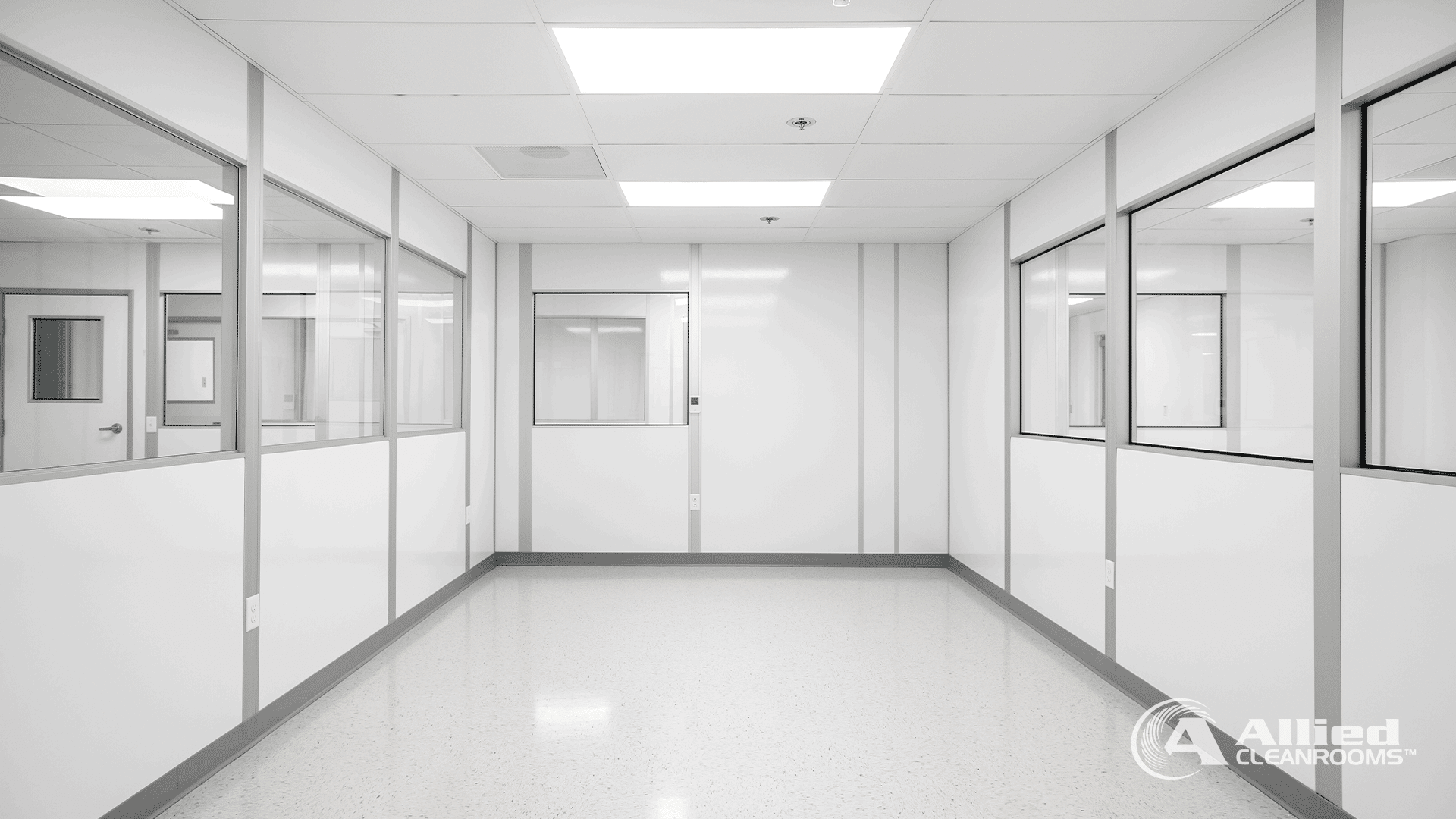
The wall panels of these modular USP 800 cleanrooms are made from materials such as FRP and uPVC, pre-engineered to withstand harsh disinfectants and hazardous drug spills. Panels are joined with coving and seamless joints, eliminating contamination traps and creating non-shedding surfaces throughout the compounding area.
HEPA or ULPA exhaust systems are built directly into the modular structure for consistent negative-pressure control. Pass-through chambers come pre-assembled with interlocks, reducing the risk of cross-contamination during material handling. Optional anterooms and airlocks can be attached to the core system, allowing USP 800 processes to be implemented with minimal on-site construction.
USP 800 cleanrooms are designed so that they can interface and connect with equipment like biosafety cabinets (BSCs), isolators, and hazardous drug storage cabinets. Real-time monitoring can be embedded in the panels, tracking air pressure, particle counts, and exhaust flow. Overhead modules provide low-velocity laminar airflow, which together maintain even distribution, at a minimum of 30 air changes per hour (ACH).
Applications
Panelized modular USP 800 cleanrooms are often used in hospital pharmacies to ensure safe handling of hazardous drugs in healthcare environments. These systems are widely adopted by compounding pharmacies where chemotherapy and other HDs are prepared at different production scales. Both 503A and 503B outsourcing facilities rely on rapid panelized module integration as well to meet large-scale requirements under strict guidelines.
Research laboratories also use modular cleanrooms to safely handle dangerous materials, with the added flexibility of customized workstations to support specific experiments. Academic institutions employ panelized systems for clinical trials involving hazardous drugs, while veterinary institutions benefit from GMP cleanrooms designed for animal-related HD processing. Ambulatory care centers likewise implement modular cleanrooms for on-site oncology compounding.
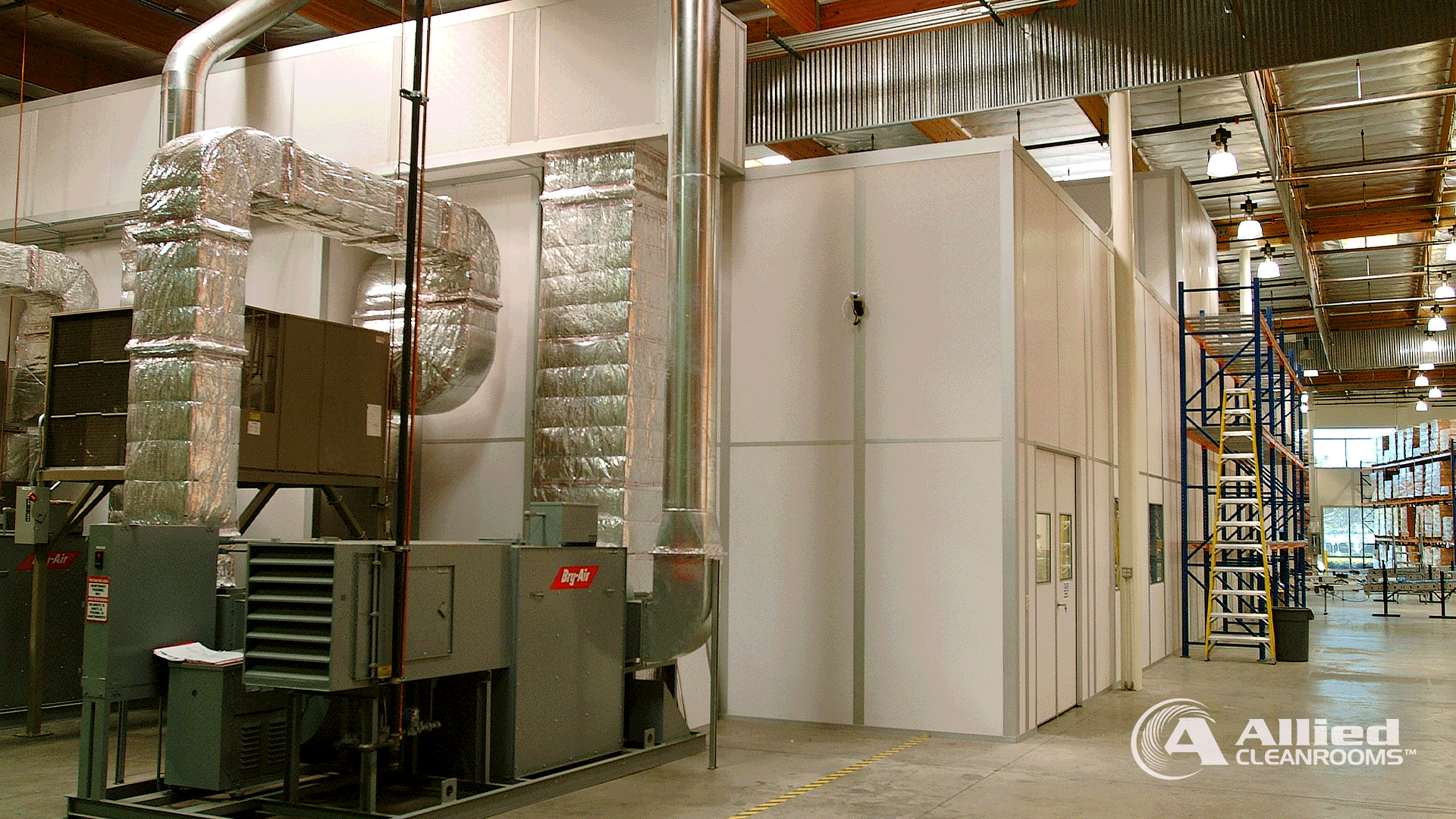
Because modular systems require minimal changes to existing structures, they are often chosen by facilities that need USP 800 compliance but want to avoid major renovations.
Advantages of Modular USP 800 Cleanrooms
Panelized modular USP 800 cleanrooms use negative-pressure layouts suited for containment, aided by HEPA exhaust systems built into prefabricated panels. Sealed modular construction and forced workflow separation reduce the risks of exposure to hazardous drugs. All of our designs can include USP 800, ISO 14644, FDA, and cGMP features, and include pre-installed, factory-tested parts.
Rugged panelized construction resists long-term wear from frequent cleaning and hazardous drug handling. Scalability is another important benefit, with modules that can expand from small suites to large facilities without disruption. Using modular wall systems also shortens construction times to weeks instead of months, which of course minimizes overall downtime. Off-site manufacturing reduces labor and material waste, while reconfigurable modules can be relocated as compounding needs change.
Compliance & Standards
USP 800 dictates the requirements for compounding hazardous drugs, and modular cleanrooms are engineered with negative-pressure zones and airtight panels to achieve this. Hoods are ISO 5 (Class A), buffer rooms are ISO 7, and anterooms are ISO 7–8. Modular cleanrooms support OSHA and NIOSH hazardous drug handling recommendations as well, with integrated PPE storage and decontamination spaces. NFPA and NEC regulations for fire safety and ventilation are met through properly designed plenums and electrical systems.
Continuous compliance will involve certification of HEPA filters, airflow, and particle counts, typically every six months. Pressure and environmental data are logged daily.
USP 800 requires defined spill response procedures, and modular cleanrooms support this by using impervious surfaces that prevent absorption and allow thorough decontamination.
Customization Options
Custom wall materials for USP 800 cleanrooms include chemical-resistant FRP, stainless steel, and PVC, each rated for resistance to hazardous drugs. Air handling can be customized with negative-pressure exhaust and HEPA/ULPA filters, configured to meet ACH requirements through modular HVAC systems. Vented cabinets are offered as add-on modules for safe drug storage.
Control options include panel-mounted systems for monitoring pressure, airflow, and alarm functions. Gowning rooms, pass-throughs, biosafety cabinets (BSCs), and isolators can be added as needed. Room sizes can be expanded by adding or removing panels to accommodate different throughput needs. Lighting and utilities can be integrated without compromising seals, while antimicrobial finishes enhance surfaces.
The modular panel system approach creates compliant USP 800 environments that are adaptable and built for long-term performance.
Negative Pressure
USP 800 cleanrooms maintain -0.01 to -0.03 inches WC to contain hazardous drugs. Modular panels are sealed, and exhaust systems are used to control contamination.
Strong Surfaces
Surfaces resist chemicals, while seamless joints reduce weak points. The finishes also hold up against drug spills and strong cleaners.
Scalable
Modular panels let your cleanroom grow with demand. Sections can be added, reconfigured, or relocated without long shutdowns.
Contact
Leave Your Cleanroom in Expert Hands


FAQs About USP 800 Cleanrooms
What are the pressure differentials under USP 800?
To help contain hazards, USA 800 mandates -0.01 to -0.03 inches WC negative pressure in buffer and storage areas, which is accomplished with sealed panelized modular construction. Anterooms should be maintained at a positive pressure of +0.02 inches WC for containment. Continuous monitoring also needs to be done from outside the cleanroom so that particles from HDs do not escape.
How should hazardous drugs be stored?
HDs should be stored in negative-pressure rooms that vent to the outside, with 12 ACH at the very least. Storage should be in enclosures separate from non-hazardous drugs. High-exhaust refrigerated units aren’t allowed for this purpose. Nonsterile HDs don’t go into buffer rooms, they’re unboxed in a different area.
What are the differences between USP 800 cleanrooms and USP 797 cleanrooms?
USP 800 cleanrooms are made to contain HDs, and use negative pressure to accomplish this. USP 797 cleanrooms, in contrast, create a sterile environment for compounding, and use positive pressure to stop contaminants from entering. USP 800 needs direct venting to the outside, while USP 797 may use recirculated air. Both also apply ISO classifications, but to different risks. If needed, modular cleanrooms can be made to meet both USP 797 and USP 800 requirements in the same location.
How should air handling and exhaust systems be configured?
Buffer rooms should receive a HEPA-filtered air supply at 30 ACH, with external exhaust to prevent recirculation. Laminar diffusers create unidirectional flow within ISO 5 spaces, and ULPA filters can be added as well in especially important areas. Environmental conditions should be maintained below 68°F with humidity under 60%. Panelized modular construction supports semi-annual certification of these systems.
What documentation is necessary for inspection and certification?
Requirements can vary by industry, but in general USP 800 cleanrooms must maintain daily logs of pressure, temperature, humidity, and ACH from integrated sensors. HEPA filter testing, airflow verification, and dynamic particle counts are typically documented twice a year. Standard operating procedures should cover cleaning, PPE use, and spill response. Staff training records are also required to demonstrate compliance.
