

cGMP Cleanrooms
When it comes to pharmaceuticals, biopharmaceuticals, and medical devices, safety and quality can’t be compromised. The production line has to be watched closely, and raw materials tested before they ever go in products. These steps (along with many others) make them safe for consumers. That’s why cGMP cleanrooms matter. They make it possible for companies to stay compliant in tightly regulated fields.
Modular cGMP cleanrooms are isolated spaces which provide controlled environments in accordance with strict guidelines under the Current Good Manufacturing Practices of regulatory bodies, such as the FDA. They are critical for any process where a sterile, controlled environment is needed, from drug manufacturing and sterile compounding to gene therapy and assembling medical devices.
As an alternative to the standard construction practices, modular systems provide a scalable vehicle that adapts and evolves as requirements change, yet at the same time create the most efficient means of achieving and sustaining GMP cleanroom compliance.
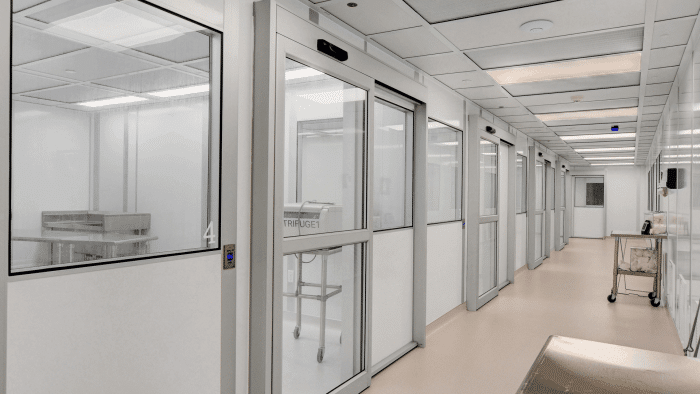
What is a cGMP Cleanroom?
cGMP is short for “Current Good Manufacturing Practice.” This is an FDA-required quality system that makes certain drug and medical device products are manufactured and controlled to the required quality levels. The “current” part in cGMP is critical, as it underscores the fact that drugmakers must be employing current systems and technology, adapting to new regulatory guidance, etc.
cGMP cleanrooms are designed to comply with these changing requirements, and reduce the risk of contamination and mistakes or mix-ups.
Becoming cGMP Accredited
While general cleanliness is essential in a cleanroom, it must also adhere to certain requirements in order to become cGMP compliant.
Some of these requirements include:
- Particle Control: This includes the control of both viable and non-viable (solid) particles to predetermined levels.
- Sterile Assurance: For aseptic processing, the cleanroom has to be designed and qualified so the sterility of the product is assured. That is the main point of this requirement.
- Regulating the Environment: Conditions like temperature, humidity, and air pressure need to be kept within certain ranges and monitored on a regular basis.
- Documentation and Validation: This involves a lot of records and training plans. IQ, OQ, and PQ protocols are part of it, along with other documentation, to show the facility is operating as it should.
Important Elements in the Design of cGMP Cleanrooms
An effectively designed custom cGMP cleanroom includes a variety of features to ensure compliance and performance. Here are some of the most important design considerations:
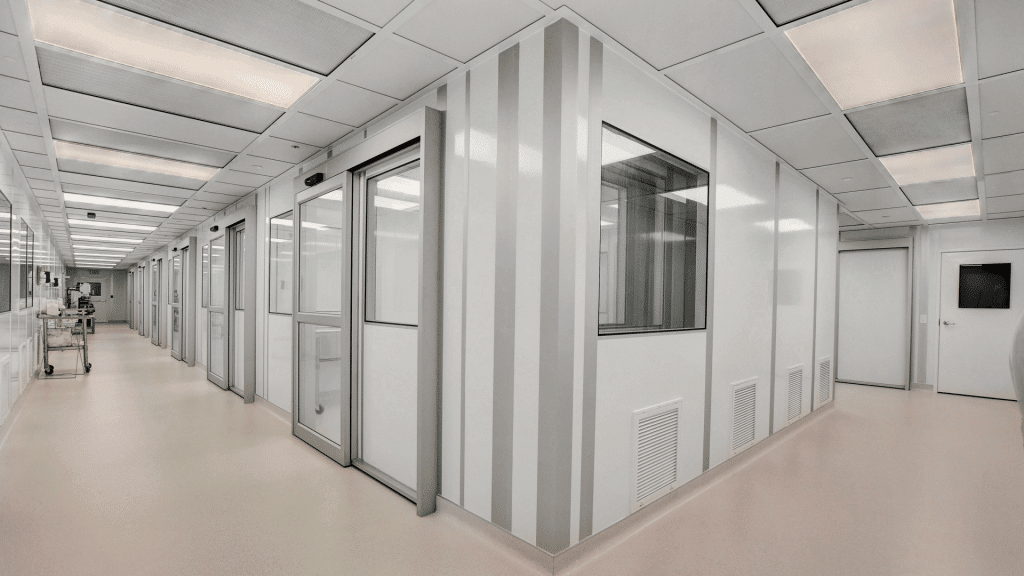
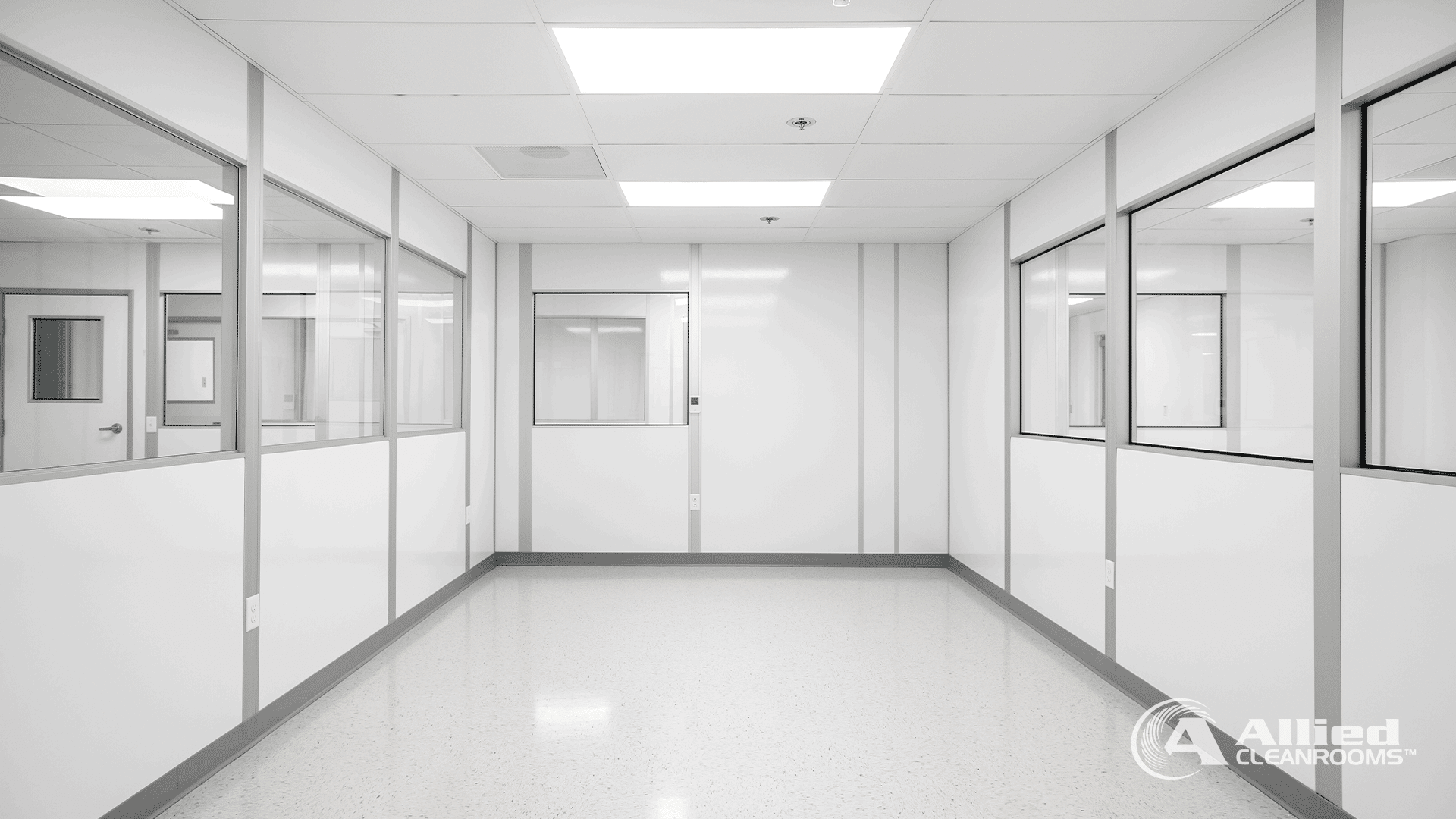
- Wall Systems: Surfaces shall be smooth, non-shedding, and resistant to chemicals required for sanitation. Materials such as FRP (fiber-reinforced plastic), uPVC, and high-quality stainless steel are popular.
- Flooring: Heat-welded, solid vinyl with coved corners is standard, and provides a seamless, smooth surface to prevent the buildup of germs and bacteria. Static-dissipative choices are also offered for use in controlled environments where static charges are a concern.
- Ceilings: Cleanroom-rated ceiling systems may have coved junctions and flush-mounted lighting to eliminate corners where dust could collect.
- Air Handling Systems: An effective air handling system is the lifeline of a cGMP cleanroom. It needs to be able to generate and maintain positive air pressure so that contaminants are pushed out. The system employs a combination of filters, including high-efficiency particulate air (HEPA) filters, and in the most demanding spaces, ultra-low particulate air (ULPA) filters, that remove particles from ambient air. The design can also include room side replaceable (RSR) filter fan units, which make maintenance and filter changes easier.
- Doors & Pass-Throughs: Interlocking doors and pass-throughs are necessary for preserving the cascading pressure and preventing cross-contamination from one area to another.
- Monitoring & Controls: Air pressure, temperature, and humidity must be monitored continuously by automated systems that log data. Such systems commonly incorporate audible or visual alarms to indicate any variations, and keep the environment within parameters.
Benefits of Modular cGMP Cleanrooms
When you compare modular cGMP cleanrooms with permanent construction, there are numerous advantages that can be discussed. Here are a few of the many reasons to go with modular for a custom cGMP cleanroom:
- Compliance-Ready: Modular cleanrooms are pre-designed to meet FDA, ISO 14644, and EU GMP Annex 1 requirements. This reduces validation time and provides an easier route to regulatory clearance. The materials are chosen for a long service life and the ability to withstand harsh disinfectants and the daily sanitizing cycles used in a GMP cleanroom environment.
- Scalable: The modular design can be scaled up or reconfigured to suit changes in production capacity, batch sizes, and the addition of new manufacturing suites.
- Embedded Monitoring: Sophisticated online or offline environmental monitoring systems can be built into the cleanroom infrastructure.
- Validation Support: A reliable manufacturer can provide documentation and support for Installation Qualification (IQ), Operational Qualification (OQ), and Performance Qualification (PQ) to help with facility certification.
Uses of cGMP Cleanrooms
The demand for cGMP compliance usually comes from several types of applications, each of which is tied to human health and safety:
- Pharmaceutical Drug Manufacturing & Sterile Compounding: Essential for making injectables, solid dose drugs, and other prescription medicines.
- Biotech Production: For cell culture, gene therapy, biologics. All need extremely clean environments to avoid cross contamination.
- Medical Device Assembly: Implants, surgical tools, and other devices must be assembled in cleanrooms to comply with FDA QSR.
- Nutraceuticals and Cosmetics: Some products here also have to meet cGMP rules for safety and quality.
Compliance and Standards
Constructing a cGMP cleanroom requires careful compliance with both international and domestic regulations. Some of the main standards include:
- FDA cGMP Regulations: These are the basic U.S. guidelines for drugs and medical devices, establishing minimum standards for manufacturing methods, facilities, and controls.
- ISO 14644 Cleanroom Standards: International standards that classify a cleanroom according to the concentration of airborne particles in the air. For manufacturing processes, GMP cleanrooms are classified from ISO 5 to ISO 8.
- EU GMP Annex 1: It provides specific guidance on sterile product manufacturing in Europe, and is invaluable for companies that are producing worldwide.
- ASTM, IEST, and OSHA: These cover a range of cleanroom functions, from testing procedures to staff safety.
Configurable Features of cGMP Cleanrooms
There is no one-size fits all solution for cleanroom compliance. Whatever the manufacturing process, a cGMP-tailored cleanroom can be designed to meet those requirements. Some of the main features that can be configured include:
- Wall Materials: FRP and powder-coated steel, each with different levels of strength and chemical resistance.
- Flooring: Heat-welded vinyl, static dissipative vinyl, epoxy, and even raised-access flooring.
- Air Management: Systems design can be single-pass, recirculating, or hybrid airflow systems. HEPA and ULPA filters can be changed according to the desired ISO classification.
- Exhaustive Controls: These can interface with Building Automation Systems (BAS) and Building Management Systems (BMS), and include alarmed sensors for pressure, temperature, and humidity, all of which report in real time.
- Special Builds: If you have unique requirements, for example sterile suites, aseptic fill suites, or cleanrooms for nuclear materials, our team can add the features you need.
Scalable
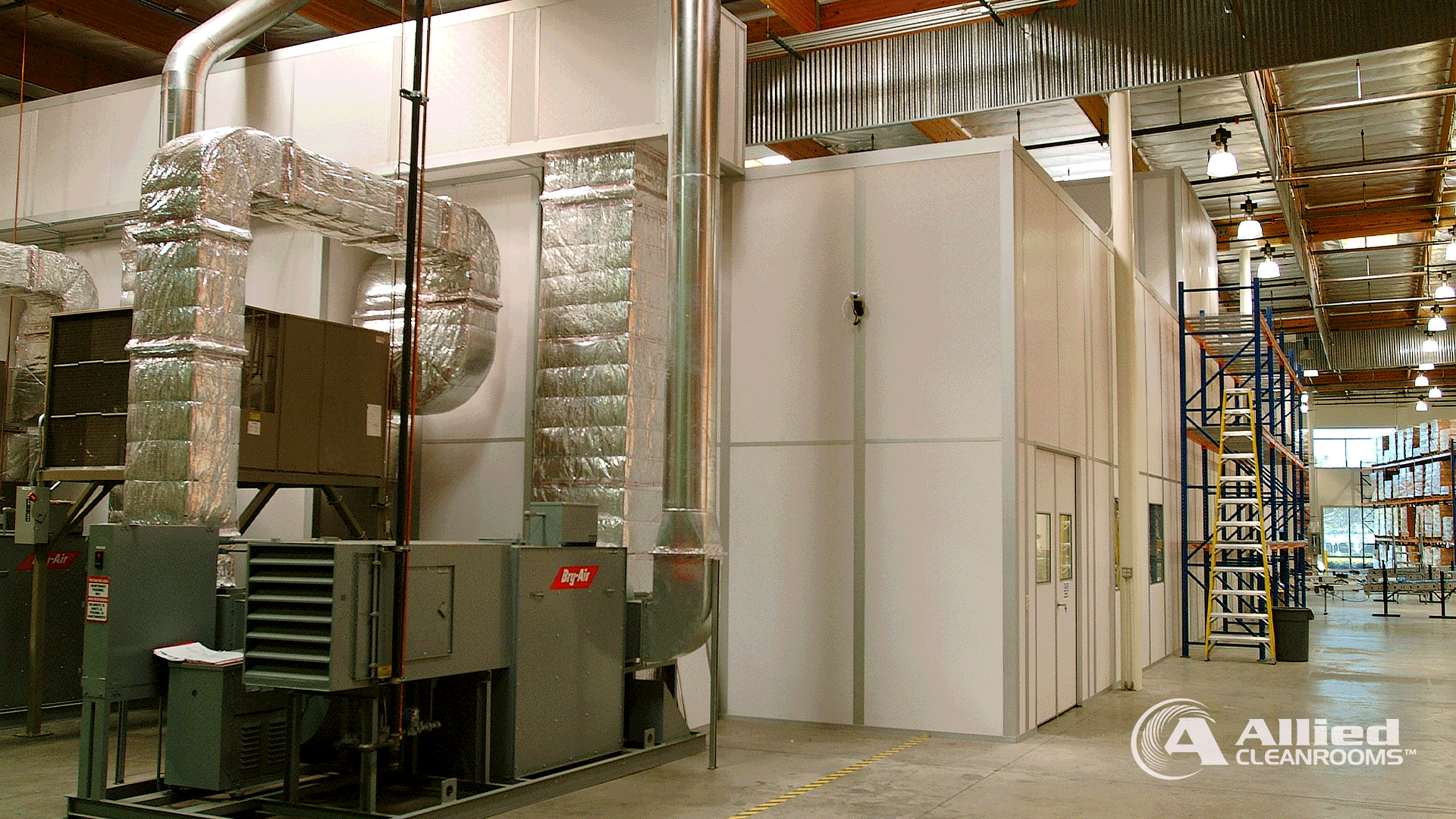
With modular, it’s easy to expand or reconfigure the layout of your cleanroom as production changes. Modular spaces allow you to scale from simple R&D labs to full manufacturing, all without the huge interruptions that are standard with traditional construction.
Built Tough
Walls, floors, and ceilings are made from strong materials that don’t shed particles, and which can take regular cleaning with chemicals without deteriorating.
Built-In Monitoring
Environmental controls watch over temperature, humidity, and air pressure in real time. Alarms and loggers step in when needed, making compliance simpler and helping avoid system failures.
Contact
Leave Your Cleanroom in Expert Hands


FAQs About cGMP Cleanrooms
What sets GMP and cGMP cleanrooms apart?
GMP is Good Manufacturing Practice, cGMP is Current Good Manufacturing Practice. The “current” in cGMP is the operative differentiator and indicates that the production process/technologies and systems must be updated in order to comply with current standards.
What kind of FDA paperwork do I need for a cGMP plant?
Documentation is an important aspect of cGMP. The essential documents include standard operating procedures (SOPs), batch records, installation qualification, operational qualification, and performance qualification.
What are the normal ISO designations for cGMP cleanrooms?
For cGMP cleanrooms, the most common classifications are ISO 5 (which is equivalent to EU GMP Grade B/C at rest, and Grade A in operation), ISO 7 (EU GMP Grade C/B in operation), and ISO 8 (EU GMP Grade D).
What is EU Annex 1 and how is it different from FDA cGMP?
EU GMP Annex 1 is a European regulation that provides guidance on the manufacturing of sterile medicinal products. Although it is based on similar principles to the FDA’s cGMP, Annex 1 specifies more detailed requirements for facilities and processes, in particular sterile manufacturing.
What are viable vs. non-viable particle requirements?
Non-viable particles are inanimate impurities, meaning dust and lint. Viable particles are live microorganisms such as bacteria and fungi. Both must be regulated in a cGMP cleanroom, but the requirements for viable particles are especially strict in sterile environments.
What is the difference between a cleanroom and a sterile room?
A cleanroom is a space designed to minimize the number of airborne non-viable particles (such as dust, aerosols, and vapors). The cleanliness level of a cleanroom is defined in ISO standards (e.g., ISO 5, ISO 7, and ISO 8) as the maximum number of particles by size that is permitted per cubic meter of air. The heart of a cleanroom is the filtration system, which relies on HEPA and sometimes ULPA filters to constantly scrub the air.
A sterile room’s focus is on the elimination of viable particles (living microorganisms such as bacteria, viruses, fungi, and spores). Sterile means free of living matter. Sterility is not just a question of air filtration; it’s about integration of design measures and strict procedures, including validation.
Sterile environments are essential in processes where microbial contamination risks the safety of patients and the quality of the end product.
A sterile room is a specific type of cleanroom that is designed to control and remove viable particles (microorganisms) using advanced filtration, sterilization, and aseptic techniques. The two facilities will only vary as to the degree of focus for controlling contamination. And while each is meant to control pollutants, they focus on different types of particles and follow their own standards.
