

Highly Classified Cleanrooms
When it’s a question of national defense, next-generation pharmaceuticals, or cutting-edge aerospace technology, your run-of-the-mill cleanroom won’t do. What’s required is an ultra-classified cleanroom, a facility designed not just to minimize contamination but also to maximize security. Such spaces are the lifeblood of industries where breaking just one protocol could botch years of research and billions in investment, not to mention national security.
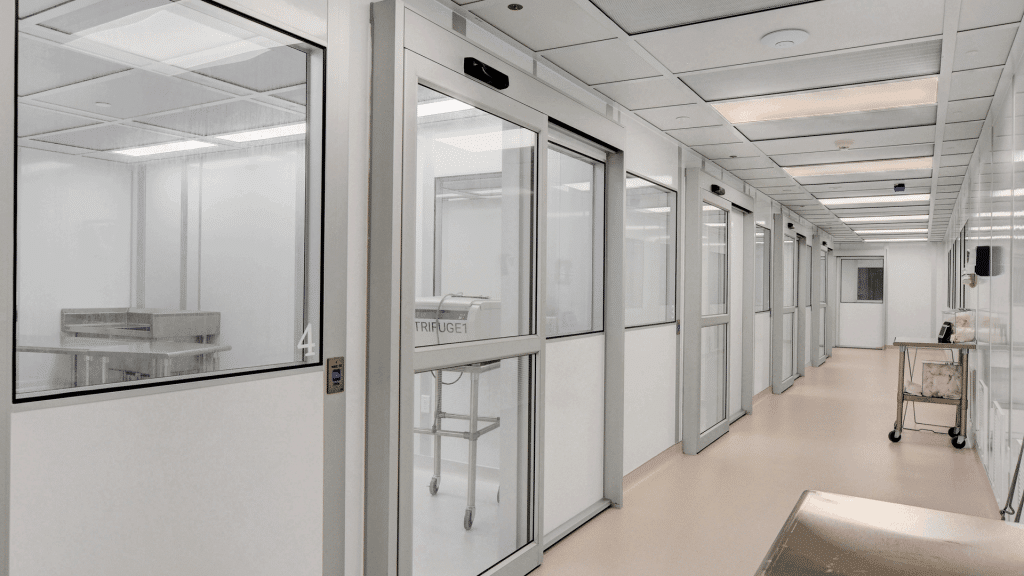
Classified cleanrooms are more than HEPA filters and positive pressure. They’re a bastion of safe settings intended for industries that cannot tolerate error. All construction is designed to minimize risks: from ISO 3 to ISO 5 air classifications to biometric access systems that only allow authorized staff inside. They are controlled systems with built-in processes that ensure purity, confidentiality, and security.
Consider a semiconductor process interrupted not by contamination, but by an unauthorized person recording a trade secret. Or a defense contractor assembling satellite optics under the threat of intellectual property theft. In such situations, sanitation is not enough. Controlled-access cleanrooms add layers of security, both physical and digital, to protect the world’s most sensitive projects. And that’s why, from biotech to aerospace, industries rely on proprietary cleanroom solutions that offer both sterility and secrecy.

Businesses in Which Top-Secret Cleanrooms Are Not Optional
- Semiconductors & Nanotechnology: In these industries, a single speck of dust or unauthorized access can destroy million-dollar wafers.
- Pharmaceuticals & Biologics: Sterile filling applications are required to meet FDA regulations and protect intellectual property.
- Aerospace & Defense: Mission-critical assembly where an escort, NDA, and government clearance may be required just to set foot on site.
- Implantable Medical Devices: Implanted devices requiring environments where contamination and unauthorized access are equally hazardous.
- Advanced R&D: Quantum computing, nanomaterials, or classified projects that border on science fiction but still demand secrecy.
Characteristics of Highly Classified Cleanrooms
- ISO 3–5 Classifications: Particle monitoring, fast air changes, and 100% ceiling coverage with ULPA filtration at tight tolerances.
- Environmental Control: Steady-state temperature, humidity, and pressure maintained within tenths of a degree or percentage points.
- Integrated Security Systems: From card readers to biometric scans and guard protocols, each entry point is secured.
- Quality Construction: FRP, PVC, and chemical-resistant finishes provide easy clean-up and years of heavy use.
- State-of-the-Art Air Handling: Redundant HVAC systems with automatic failover ensure uninterrupted compliance and security.
- Custom Configurations: Multi-room sequencing, high-bay assembly spaces, and gowning/airlock transitions specific to project requirements.
Modular vs. Stick-Built Cleanrooms: Security Differences
Here’s where most companies miss on risk: conventional stick-built cleanrooms. Functional as they may be, they rely on a maze of subcontractors, including electricians, framers, HVAC installers, and finishers from different companies.
Each additional trade means more hands on the wheel, another background check to verify, and another point where things could go off the rails. Managing security across many subcontractors is not just difficult, it’s expensive.
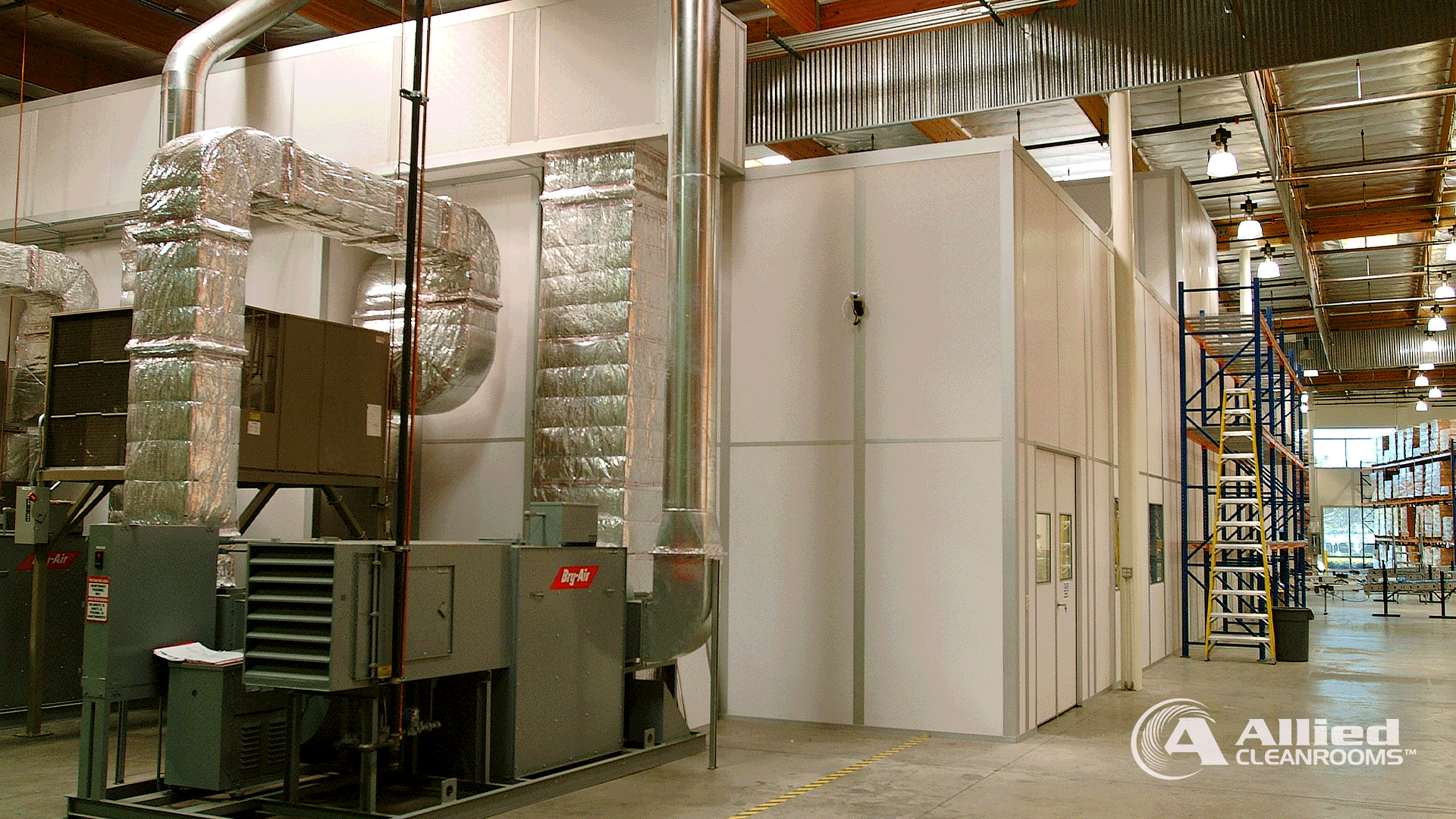
In contrast, modular classified cleanroom systems mitigate these risks significantly. By producing prefabricated parts in a controlled environment, fewer trades are needed on site. This translates to tighter control, less exposure, and greater build speed without any loss in performance. For firms in which secrecy is as important as sterility, that gap isn’t just operational; it’s existential.
Compliance Above and Beyond What is Required
A top-secret cleanroom isn’t only about achieving ISO 14644 standards. These structures tend to be engineered well beyond them, consistent with criteria such as FDA cGMP for aseptic pharmaceutical production; USP 797/800 sterile compounding; ASTM and NASA criteria for aerospace/military applications; and specific security protocols established by government or private contracts.
Compliance is not the endgame; it’s the floor. The real test of these environments is if they can provide secure access to classified data, tight protection for intellectual property, and keep human beings safe at the same time.
Actual Situations: From Defense to Deep Space
In the defense industry, it is not unusual for cleanroom employees to work under escort, with no phones, laptops, or recording devices allowed inside. Every action is tracked, every material recorded. Aerospace buildings making payloads for rockets or the optics on satellites require air so pure and access so controlled that they admit only a limited number of staff across their threshold.
Private industry is pushing the limits as well, with projects once thought of as science fiction now being developed inside secure cleanrooms. When that is the case, the cleanroom is not just a workplace. It’s a defense against contamination, competition, and compromise.
The Advantages of Opting for Classified Cleanroom Systems
Some of the main advantages of classified cleanrooms are ultra-low particle levels and the safeguarding of delicate processes and multimillion-dollar parts. There’s also regulatory peace of mind, since these spaces are developed to meet international standards and government contracts.
Cleanroom users are less concerned with features and more focused on results, and this is where confidential cleanroom services come into play. They are not mere facilities; they are profit protectors.
Not only do these cleanrooms help prevent costly contamination, protect intellectual property, and minimize expensive downtime, they can also improve your bottom line.
Add in the security cost savings of modular design, the need for fewer subcontractors, and the faster time to operation, and you get reduced risk along with a solid ROI.
Since a single breach or batch failure could result in millions of dollars being written off, an investment in restricting access to a cleanroom is not expensive. It’s an insurance policy.
The Cleanroom of Tomorrow
Industries are increasingly driven by sensitive processes, regulation, and secrecy. Breakthroughs from life-saving biologics to the next vaccine discovery beyond COVID-19 will only thrive in spaces that combine sterility with security.
The winning companies will be those that understand the cleanroom of the future is not only cleaner, but also smarter, built to safeguard what matters most. That is the promise of the top-secret cleanroom and why it has become known as the Holy Grail of the world’s most exacting industries.
Security Meets Sterility
Classified cleanrooms combine ISO control with biometric access, protecting both products and sensitive data.
Modular Advantage
Prefabricated systems reduce subcontractors, cut risk, and speed up builds without sacrificing performance.
Compliance Assured
Built to exceed ISO, FDA, and NASA standards, these facilities deliver both regulatory peace of mind and IP protection.
Contact
Leave Your Cleanroom in Expert Hands


FAQs About Highly Classified Cleanrooms
What makes a highly classified cleanroom different from a standard cleanroom?
Unlike standard cleanrooms that focus mainly on contamination control, highly classified cleanrooms combine sterility with advanced security. They feature ISO 3 – 5 air classifications, biometric access, and redundant HVAC systems. While they require a higher upfront investment, they prevent failures or breaches that could cost millions. In these industries, the price of not investing is far greater.
Which industries require highly classified cleanrooms?
These facilities are essential in defense, aerospace, pharmaceuticals, semiconductors, and implantable devices, where one error could mean lost contracts or failed audits. The costs of contamination, downtime, or intellectual property theft often dwarf the price of building secure facilities. For high-stakes sectors, a classified cleanroom is not an expense – it’s a safeguard against multi-million-dollar losses.
Why is modular construction preferred for classified cleanrooms?
Modular systems cut down subcontractor involvement, reducing both security risks and project costs. Prefabricated parts allow for faster installation, meaning less downtime and lower labor expenses. While modular designs may seem like a higher initial investment, they deliver long-term savings by shortening timelines. Faster deployment means faster ROI and reduced exposure to financial risk.
How do classified cleanrooms ensure compliance and security at the same time?
They are built to exceed ISO 14644, FDA cGMP, USP 797/800, and NASA/ASTM standards, while adding strict access controls like biometrics and device bans. This prevents both contamination and data breaches. Though compliance-driven builds can be costly, the savings from avoiding failed audits, shutdowns, or IP theft make them highly cost-effective. They protect both profits and reputation.
How much does a highly classified cleanroom cost compared to a standard one?
A highly classified cleanroom can cost 30-50% more than a standard cleanroom due to advanced features like ISO 3-5 classifications, biometric access, redundant HVAC, and specialized materials. While the upfront investment is higher, the real savings come from avoiding failed audits, IP theft, and contamination-related shutdowns. In high-stakes industries, the ROI outweighs the added expense.
