To newcomers, the cleanroom industry can appear full of overlapping jargon that’s hard to make sense of. Someone on your team might require you to source a Class 100,000 space, but a manufacturer may respond with a proposal for an ISO 8 space. Are these the same or different? If they are different, why are they used to refer to the same thing?
In this article, we’ll clear up the confusion. First, we’ll define what a Class 100,000 cleanroom is, explain its relationship with ISO 8, discuss its particle limits, outline some of their common requirements, features, and more.
What Is a Class 100,000 Cleanroom?
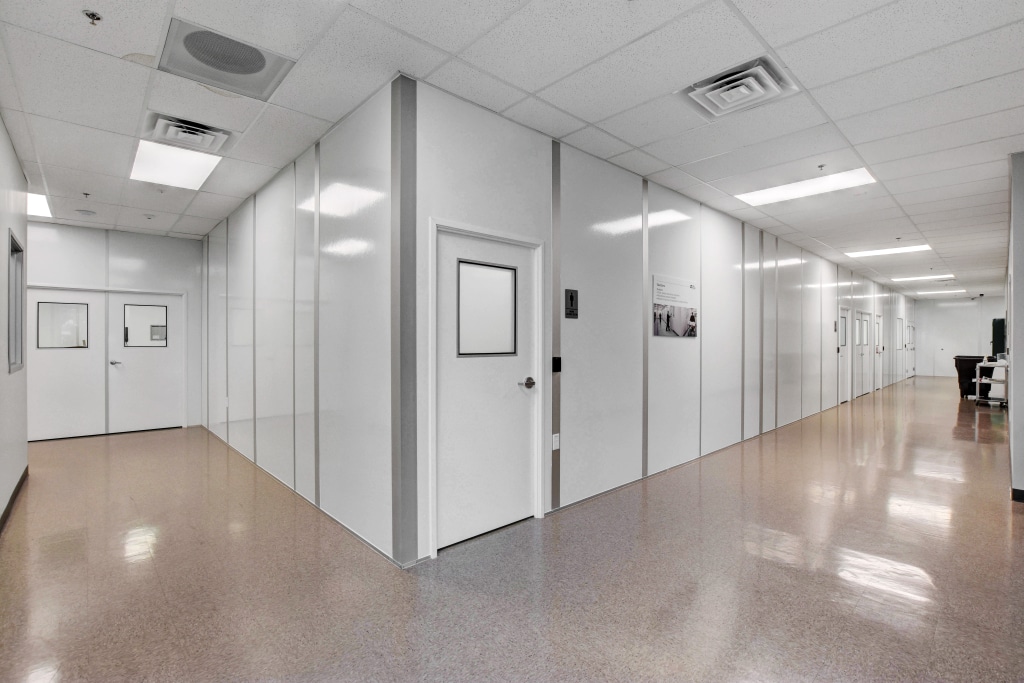
A Class 100,000 cleanroom is simply a controlled environment that places limits on the number and size of particles allowed in the air. In this case, 100,000 is the limit on particles that are 0.5 micrometers or larger for every cubic foot of air. This may sound like a lot, but half a micrometer is very small, and the air inside these cleanrooms is much cleaner than your typical outside environment, or what we breathe in daily in normal spaces like our offices or homes.
A Class 100,000 cleanroom is also known as an ISO 8 cleanroom, but it comes from an older system called the Federal Standard 209E. This system is no longer used, but the term is still commonly thrown around, despite the fact that ISO became the dominant classification system around 2001.
To reiterate, ISO 8 and Class 100,000 cleanrooms are equivalent, the same. The only real difference is in how the air is measured. ISO classifications use cubic meters, while FED-STD-209E uses cubic feet.
What Exactly Are the Particle Limits in Class 100,000 Cleanrooms?
Cleanliness in Class 100,000 cleanrooms, as we’ve mentioned already, is measured by how many particles (and their relevant sizes) are present in a set volume of air. A Class 100,000 cleanroom (ISO 8) has the following limits:
- 100,000 particles ≥ 0.5 µm per cubic foot (or 3,520,000 particles per cubic meter)
- 832,000 particles ≥ 1.0 µm per cubic meter
- 29,300 particles ≥ 5.0 µm per cubic meter
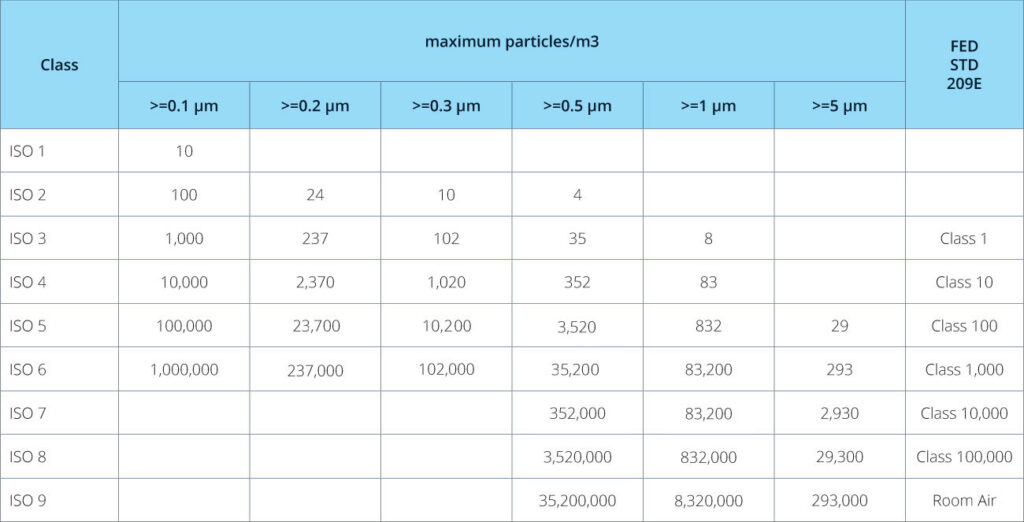
Another important point to remember is that particle counts are cumulative, so a particle that is 5 µm will be counted in the 5.0 µm, 1.0 µm, and 0.5 µm categories, since each one includes particles of that size and larger.
Requirements for Class 100,000 Cleanrooms
To meet the standards for a Class 100,000 cleanroom, or any other cleanroom for that matter, there are certain design considerations that need to be in place. Here are a few of the requirements are needed to meet this classification:
- Air Changes Per Hour (ACPH): These spaces generally require 15 to 25 ACPH; in other words, the full volume of air should be replaced up to 25 times every hour so that particles do not linger and accumulate.
- Filtration and Ceiling Coverage: HEPA filters are often added, and remove 99.97% of particles at 0.3 micrometers or larger. They are generally sufficient to meet the classification, and ULPA filters are not often necessary. Also, ceiling coverage ranges from 15% to 25%, depending on the layout and use.
- Airflow Type: Class 100,000 cleanrooms only require turbulent or non-directional airflow, and laminar airflow is almost never required.
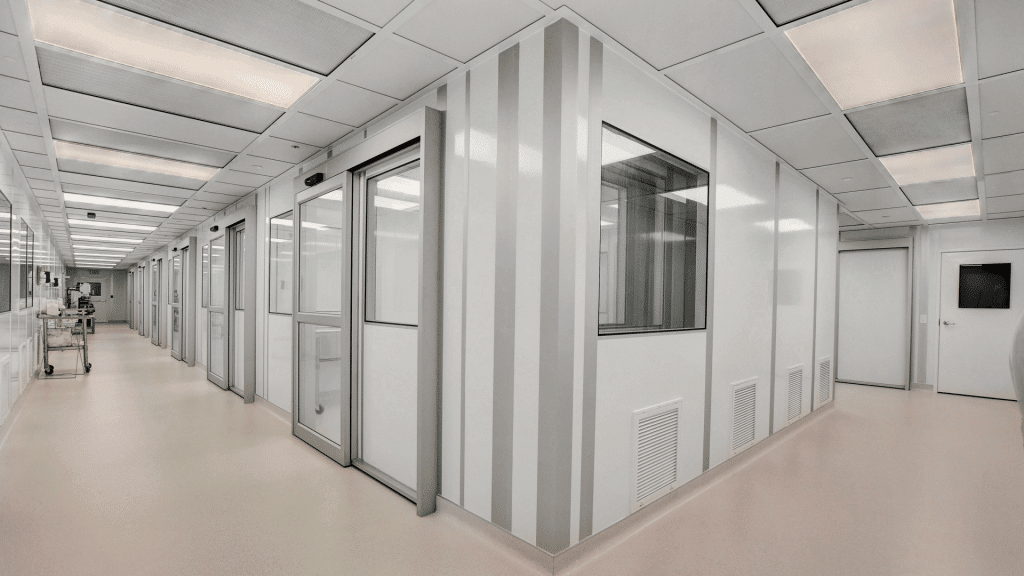
- Wall/Construction Type: Choices include softwall (vinyl curtains), hardwall (rigid panels), hybrid modular systems, or stick-built spaces; each has its own benefits and drawbacks in terms of costs, durability, and flexibility.
- Environmental Control: Many spaces also require environmental control over temperature, humidity, pressure (whether positive or negative), and other conditions, depending on the industry and application.
Industries That Use Class 100,000 Cleanrooms
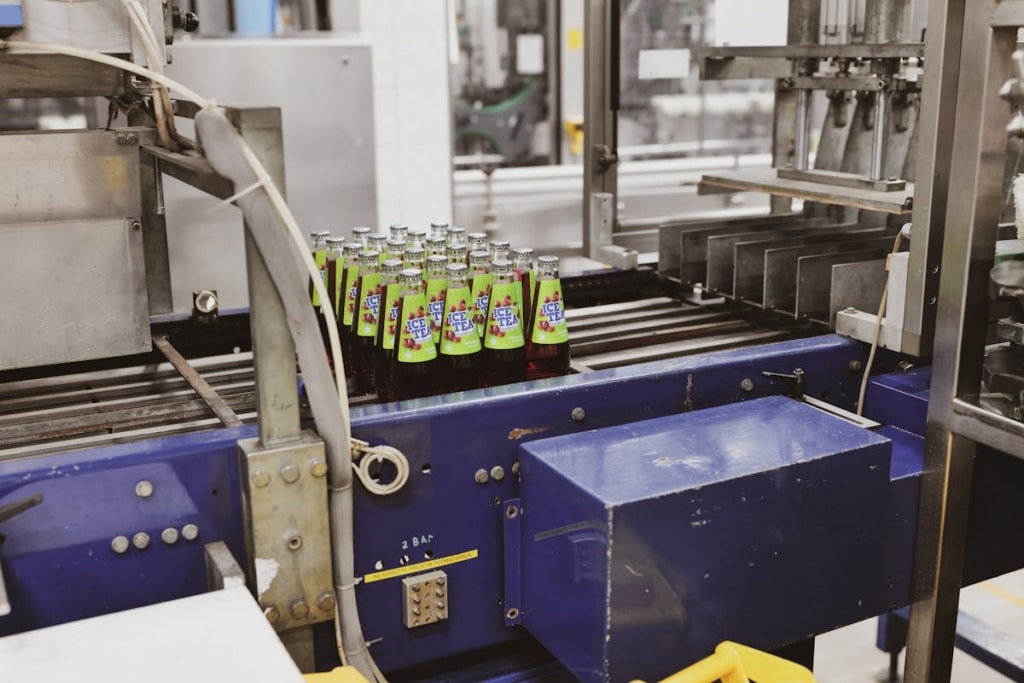
Class 100,000 cleanrooms are used in industries that require relatively low levels of cleanliness, and without the high costs of stricter spaces. Here are some of the most common uses for them:
- Medical Device Manufacturing: For assembling and packaging items, such as catheters, diagnostic kits, surgical tools, and more.
- Pharmaceutical Packaging: Protects the handling of products like pills, capsules, and liquid medications.
- Aerospace and Defense: Creates a clean atmosphere for assembling parts; particles in these systems can even cause mission failures.
- Food & Beverage: Used in the packaging of food products, and can be used to extend shelf life.
- Electronics Assembly: Helps protect various electronic parts, such as circuit boards and semiconductors, from dust or electrostatic discharge.
Designing a Class 100,000 Cleanroom
To build a cleanroom, you’ll need more than simply walls and filters. The layout, materials, and systems are also very important, and work together to minimize contamination risks.
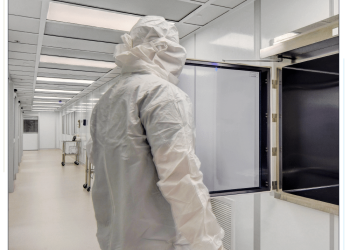
- Layout and Flow: Many designs need separate areas for activities like gowning, where staff change into cleanroom clothing; airlocks may also be added to prevent outside air from entering the main space.
- Modular vs. Permanent Construction: Modular cleanrooms are popular for ISO 8/Class 100,000 because they can be installed quickly, can be added to or reconfigured later on, and keep initial costs low.
- Material Selection: Cleanroom materials often need to be non-porous, easy to clean, and resistant to certain chemicals (because of frequent cleaning); some common choices include stainless steel, epoxy or vinyl flooring, acrylic or polycarbonate panels, and more.
- Ceiling Grid and Filter Placement: Filters and lighting are installed in a ceiling grid system; in Class 100,000 cleanrooms, filters are typically concentrated over importing working areas, and in general there isn’t a need to cover the entire ceiling, as there may be in stricter spaces.
The Bottom Line
In short, a Class 100,000 cleanroom, also called an ISO 8 cleanroom, is a relatively low-level controlled environment that places limits on airborne particles. It’s often a low cost and practical solution for operations that don’t require strict controls, but still would like a basic level of cleanliness.