

Pharmaceutical Cleanrooms
Pharmaceutical cleanrooms are more than sterile spaces, they’re fortifications against contamination for your drugs, biologics, and injectables. These are precisely controlled spaces that obliterate potentially harmful microbial or particulate intruders that might spoil the drug or risk patient safety.
Pharmaceutical cleanrooms ensure requirements are met and protect your R&D investment, while challenging FDA/EMA guidelines head on. The cleanroom is the foundation of aseptic processing: without it, even the most advanced formula won’t pass audits. The payoff is a reliable batch that leads to profit with guaranteed scalability.
Viable and non-viable threats are addressed within pharmaceutical cleanrooms via intelligent design and stringent testing. This is in keeping with cGMP’s five P’s: People, Premises, Processes, Products, and Procedures, with an emphasis on premises to avoid expensive mistakes. Sites that follow this approach achieve up to 40% faster validation cycles, allowing them to focus more on cell and gene therapy growth. Don’t be stuck with a one-size-fits-all response. Customize your pharma cleanroom to match your sterile needs for the highest results. Get this right, and you are not just compliant, you’re unstoppable.

Core Design Features That Power Cleanroom Performance
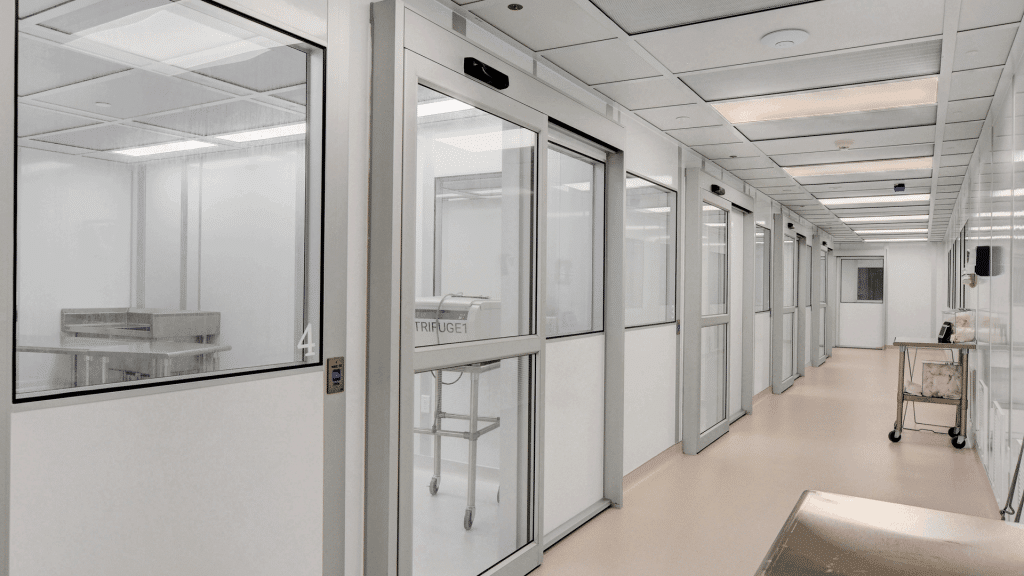
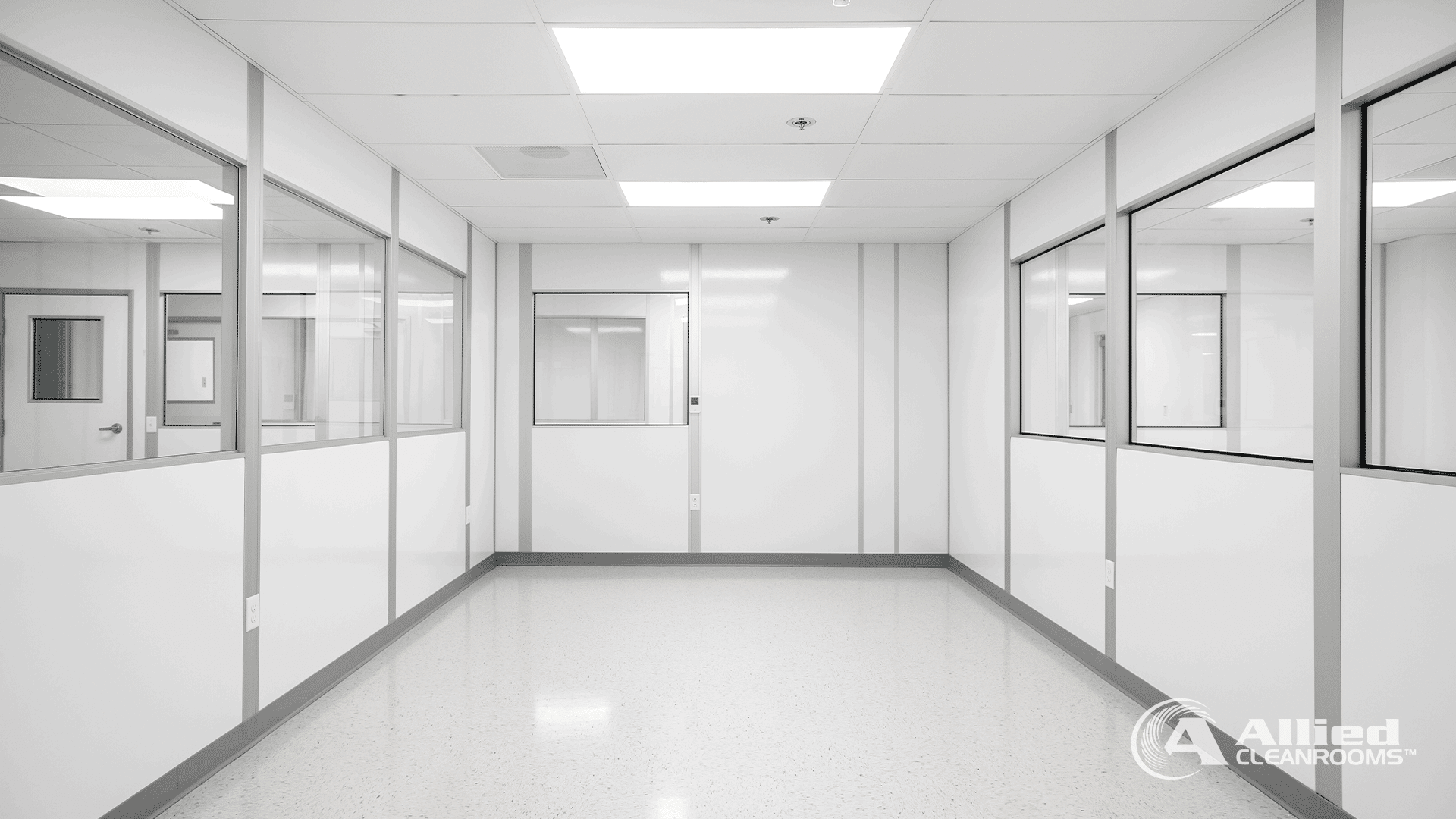
The walls are built to shrug off harsh disinfectants. Smooth FRP panels or steel modules resist corrosion while locking out contaminants. They are paired with heat-welded vinyl floors featuring integral coves to eliminate dirt traps, ensuring swab tests always come back clean. Ceilings with cleanroom-rated grids or FRP tiles maintain seamless airflow, preventing particle buildup in dead zones. The result? Cleaning cycles drop from hours to minutes, cutting labor costs without compromising safety.
Air handling is where pharmaceutical cleanrooms excel: room-side replaceable HEPA/ULPA fan filter units create positive-pressure cascades, pushing clean air toward dirtier zones. Gowning rooms and pass-throughs separate workflows, slashing cross-contamination risks by design.
Environmental controls for temperature, humidity, and pressure differentials keep conditions rock-steady, avoiding microbial growth triggers. Continuous particle monitoring systems catch issues before they escalate, turning potential violations into quick fixes. Facilities with these features report a 25% drop in non-conformance reports during EMA Annex 1 audits.
Real-World Applications: From Aseptic Filling to Vaccines
Pharmaceutical cleanrooms handle everything from sterile injectables to non-sterile tablets, but high-stakes biologics and vaccines demand ISO 5 precision. Aseptic filling lines thrive here, where a single dust speck could cost millions. Modular pharmaceutical cleanrooms scale seamlessly for cell and gene therapy production, from trials to commercialization. Compounding facilities lean on USP 797 and USP 800 for compliant sterile prep, ensuring safe doses without recalls. These setups minimize waste and maximize throughput, letting you capture market share faster.
Formulation and packaging lines benefit from buffer zones that isolate critical steps, reducing human error in high-volume operations. Whether you’re producing oncology drugs or IV solutions, a well-designed cleanroom turns regulatory hurdles into innovation launchpads. Producers prioritizing airflow and material choices see shorter lead times and lower rejection rates. It’s not about building bigger, it’s about building smarter for your niche. Get this right, and your facility becomes a profit engine.
Decoding Cleanroom Classifications: Match ISO Levels to Your Needs
ISO 5 (Class 100) cleanrooms are non-negotiable for aseptic filling and open-vial handling, capturing 99.999% of particles down to 0.3 microns for ultra-sterile zones. ISO 6 (Class 1,000) suits formulation rooms for less critical sterile tasks, balancing cost and control. ISO 7 (Class 10,000) buffer zones and compounding areas protect medium-risk ops, while ISO 8 (Class 100,000) handles gowning and staging.
EU GMP Annex 1 mirrors this with Grades A-D, but with stricter viable monitoring for Europe. Mismatch your classification, and you’re courting audit failures; nail it, and your facility runs like a well-oiled machine.
These tiers are engineered to align particle limits with process risks, from vaccine lyophilization to biotech fermenters. Pharma pros who lock in classifications early avoid retrofits costing tens of thousands. ISO 14644 sets the global standard, but FDA cGMP adds validation rigor for U.S. operations. Audit your setup against these benchmarks to unlock smoother scaling. Precision here means fewer headaches and faster growth.
Why Modular Pharmaceutical Cleanrooms Win Long-Term
Modular designs embed FDA cGMP and EMA Annex 1 compliance from the start, sidestepping the delays of custom builds. Durable FRP walls and covered floors withstand aggressive cleaning, cutting maintenance costs by 30%.
Validation packages with IQ/OQ/PQ documentation streamline FDA approvals, turning paperwork into a formality. Scalability lets you start small for R&D and expand for full production, handling demand surges like post-pandemic vaccine runs. The result? Faster ROI, less downtime, and a facility that grows with your ambitions.
Sealed joints and trusted materials like coated aluminum minimize contamination vectors, simplifying viable and non-viable testing. Companies switching to modular cleanrooms report 50% faster installations, hitting markets before competitors. Focus on outcomes: reliable compliance that protects your pipeline and profits. Modular isn’t just flexible, it’s a strategic advantage. Build once, win for decades.
Pharmaceutical Cleanroom Compliance: FDA cGMP, USP, and Beyond
FDA cGMP demands tight controls on premises, ensuring every pharmaceutical cleanroom supports product integrity from raw materials to final packaging. EMA Annex 1 sharpens the focus on sterile meds with robust risk assessments for Annex 1-grade environments. ISO 14644 classifications set particle limits, while USP 797/800 mandate ISO 7 buffers and ISO 5 hoods for compounding. Non-compliance risks warnings or shutdowns that erode trust overnight. Build in these standards, and your operation is bulletproof against surprises.
Automated monitoring for viable microbes and non-viable particles proves ongoing cleanroom compliance, cutting audit prep time in half. Pharma leaders who integrate these systems stay ahead of regulators. The goal: a compliant ecosystem where standards fuel growth, not friction. Compliance isn’t a hurdle—it’s your foundation for success. Get it locked in, and scale with confidence.
Why Modular Pharmaceutical Cleanrooms Win Long-Term
Design layouts with cascading pressures across gowning rooms, buffers, and suites to optimize workflows. Choose the airflow: vertical laminar for filling, or hybrid for biologics, to match throughput goals. Materials like PVC walls or ESD flooring suit electrostatic-sensitive gene therapies, while integrated alarms for pressure and particles prevent drifts. Accessories like sterile pass-throughs and custom benches streamline ops, reducing error-prone touchpoints. Customized right, your cleanroom becomes a profit center, not a cost.
Contamination Control
Pharmaceutical cleanrooms help you keep drugs, biologics, and injectables safe for consumers, against both viable and nonviable threats.
Scalable
Whether for aseptic filling or large-scale vaccine production, pharmaceutical cleanrooms help you expand with demand. Pharmaceutical companies can begin with a modest modular cleanroom and add space later as operations grow. The expansion doesn’t require production to stop.
Compliant
Our cleanrooms are made to meet cGMP, ISO 14644, USP 797, USP 800, and other guidelines or regulations. Automated monitoring is also available so that cleanrooms remain in compliance.
Contact
Leave Your Cleanroom in Expert Hands


FAQs About Pharmaceutical Cleanrooms
What ISO classification is needed for pharmaceutical filling rooms?
ISO 5 ensures particle-free air for aseptic processes like vial filling.
How does cGMP apply to pharmaceutical cleanrooms?
It mandates premise and process controls to guarantee drug quality, with cleanrooms as the core defense against contamination.
What are common flooring and wall materials?
Heat-welded vinyl floors and FRP walls lead for durability and easy sanitization in pharma settings.
What’s the difference between viable vs. non-viable particle testing?
Non-viable targets airborne particles; viable tests for microbes—both are critical for cGMP validation.
What’s the difference between buffer rooms vs. cleanrooms in pharma?
Buffer rooms are ISO 7 support zones, while full cleanrooms encompass suites for end-to-end sterile control.